This is one of the most common questions we hear, often asked with a mix of curiosity and hesitation.
The short answer is yes. Many travelers do explore the Marrakech souks on their own, and some enjoy it very much.
The longer, more honest answer is: it depends on how you like to travel, what you’re hoping to get from the experience, and how comfortable you are with a bit of uncertainty.
We live and work here, and much of what we do revolves around helping visitors navigate Marrakech in ways that feel engaging and rewarding rather than overwhelming. Over the years, we’ve seen solo wanderers completely fall in love with the souks. We’ve also seen thoughtful, capable travelers leave feeling tired, frustrated, or quietly disappointed, without always being able to explain why.
So instead of a simple yes or no, it’s more useful to look at what exploring the souks without a guide actually feels like in practice.
What People Imagine vs. What the Souks Are Actually Like
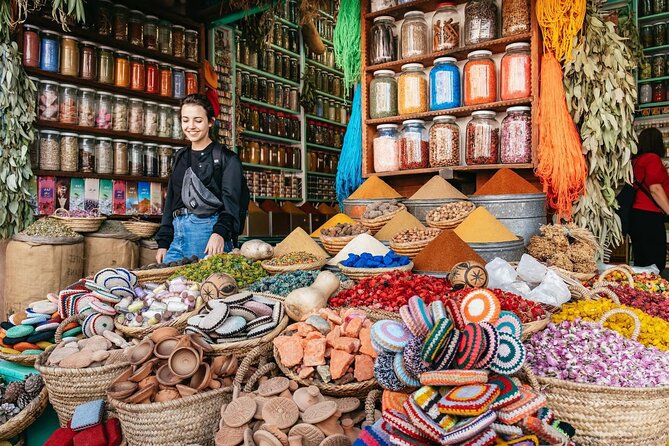
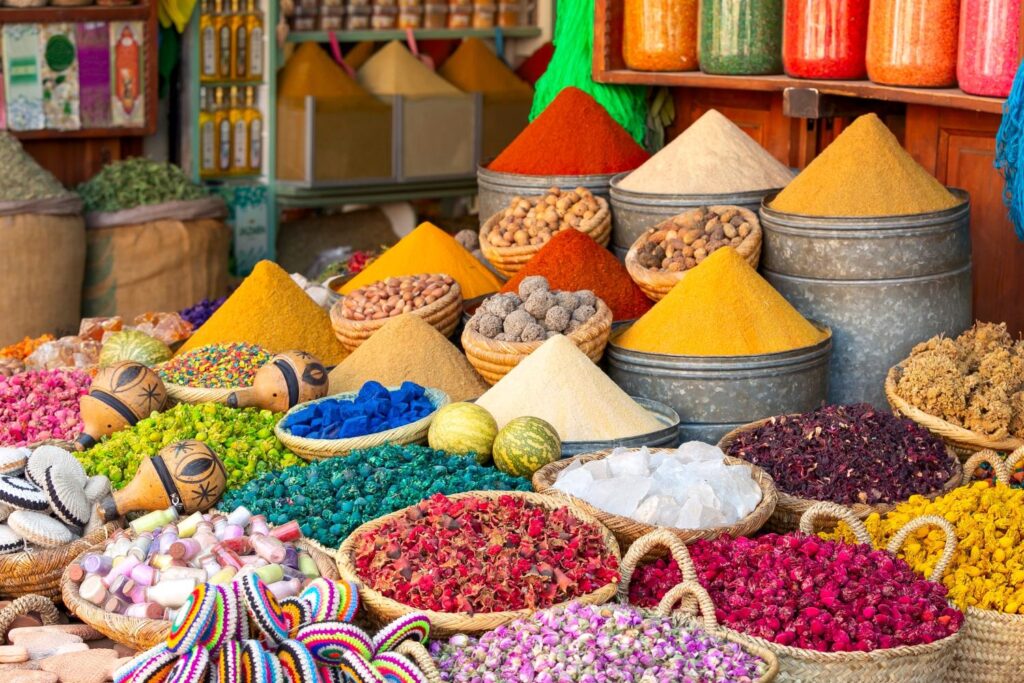
Many travelers arrive with a very specific image in mind: narrow lanes lined with colorful spices, artisans quietly at work, a sense of chaos that somehow feels poetic and contained.
Parts of that image are real. Others are shaped by films, curated photos, or experiences in smaller, more structured markets elsewhere. As a result, many visitors imagine the souks as a single, clearly defined area, a large market you enter, explore, and then exit again, more comparable to places like Souk El Had in Agadir, Khan el-Khalili in Cairo, or other open-air bazaars with clear boundaries.
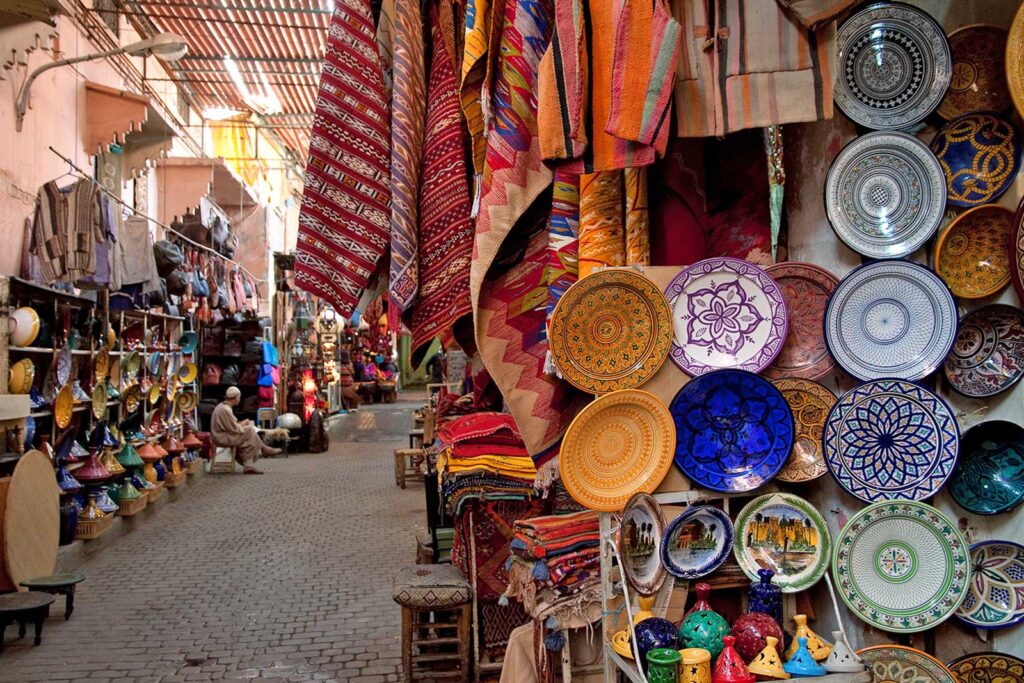
In reality, the souks of Marrakech are something else entirely. They are a dense, living network of commercial streets layered over centuries of history. They blend seamlessly into residential alleys, workshops, mosques, storage spaces, and dead ends. There is no clear moment where “the souks begin” or “the souks end,” and that is part of both their charm and their challenge.
The Marrakech souks are:
- Vast and interconnected, not a single market area
- Actively commercial, not a preserved craft village or a curated artisan setting
- Loud, crowded, and constantly in motion, especially from mid-morning to late afternoon
- Shared by shoppers, motorbikes, handcarts, workers, neighbors, and children heading home
What often surprises travelers most is how functional the souks truly are. They were not originally designed with visitors in mind, but as a large, lived-in commercial area serving everyday needs. They connect supply routes, workspaces, and neighborhood shortcuts across a vast network of streets, where people earn their living repairing tools, crafting goods, dyeing leather, selling food and household items, loading carts, and moving fast through the day.
That everyday functionality is what gives the souks their distinctive energy. It is also what can make them fascinating, disorienting, and at times overwhelming, especially when you are experiencing them for the first time.
Exploring the Souks Without a Guide: What Usually Works Well
Going on your own can be deeply rewarding, especially if you enjoy wandering, observing, and letting things unfold without explanation layered on top.
From what we’ve seen, independent exploration tends to work best for travelers who:
- Are comfortable not understanding everything they see
- Don’t mind getting a little lost
- Are patient with interruptions and unsolicited attention
- See moments of confusion as part of the experience, not a failure
Without a guide, people may be more attentive and notice small, unplanned details: a bakery pulling bread from the oven, vegetables being weighed on a metal scale, kids playing hide-and-seek or kicking a ball. These moments can feel more personal when you come across them on your own.
It’s also true that many people feel a sense of accomplishment navigating independently. The medina can be disorienting at first, and gradually finding your bearings builds confidence quickly.
That said, independence does come with trade-offs.
The Challenges Travelers Don’t Always Expect
Exploring the souks without a guide is not inherently difficult, but it often feels different from what many travelers expect, especially on a first visit. Most challenges don’t come from the souks themselves, but from the gap between how people imagine the experience and how the souks actually function day to day.
Getting Lost (and How That Actually Feels)
Getting lost in the souks is almost inevitable. GPS works inconsistently inside the medina, satellite maps don’t always capture narrow alleys accurately, and many passages don’t appear clearly or overlap under multiple street names.
For some travelers, this uncertainty is part of the appeal and adds to the sense of adventure, especially since safety is generally not a concern. For others, particularly in the heat or after a long day, it can become stressful more quickly than expected. What usually matters most isn’t whether you get lost, but how you respond when it happens. If uncertainty turns into tension, the experience can start to feel heavy rather than curious.
Constant Interaction Is Part of the Environment
Another thing that often surprises travelers is the level of interaction.
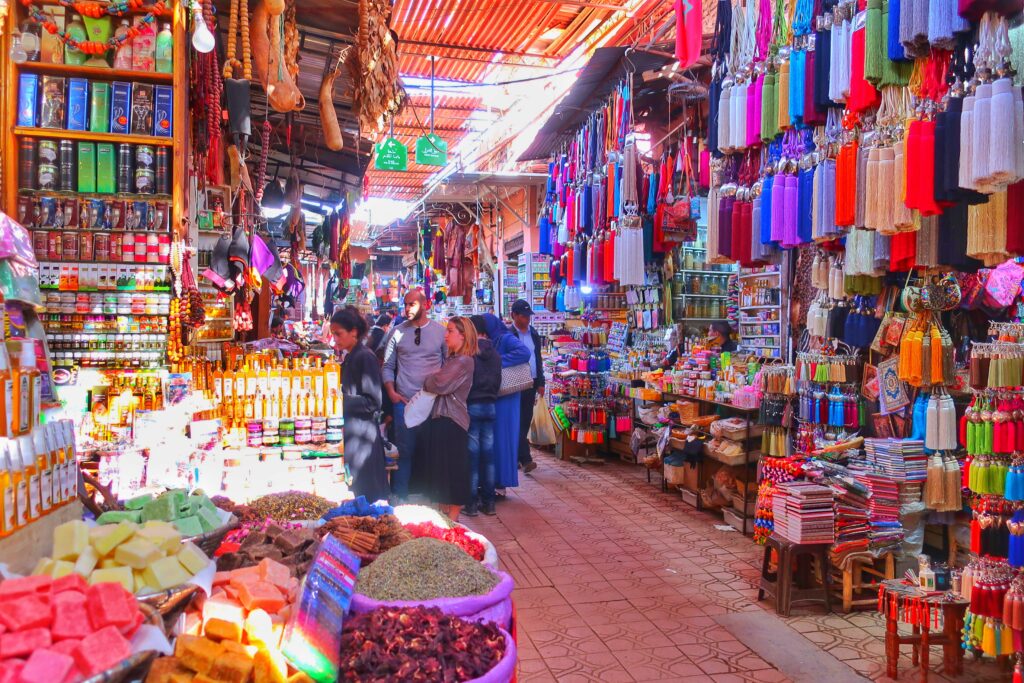
Shopkeepers will greet you, invite you to look, and ask where you’re from. Some are warm and chatty. Some are persistent. Most are simply doing their job in a setting where interaction is a normal and expected part of daily business.
Many travelers worry about being rude if they don’t engage. In reality, a calm “no, thank you” and continuing to walk is completely understood. What tends to create discomfort isn’t refusal, but hesitation. Stopping, apologizing, or explaining too much can unintentionally invite more conversation. In the souks, clarity is usually kinder than over-politeness.
This becomes easier with familiarity, but it can feel tiring at first, especially when you’re not used to being addressed so often.
“I don’t want to offend anyone”
This is a kind instinct, but it can sometimes make things harder. Polite hesitation often invites more conversation, not less. Clear, calm boundaries, a smile and a simple “la, shukran” (no, thank you), are usually better understood than long explanations.
“Just Browsing” Isn’t Neutral Here
A common assumption is that you can wander the souks and browse casually, much like in a mall or museum shop. In practice, browsing is rarely neutral here.
Standing still, touching items, or making prolonged eye contact is often read as interest. Shopkeepers are not being aggressive; they’re responding to signals that, in their context, usually mean “I might buy.” This is why interactions can feel more immediate and involved than many travelers expect, even when they don’t intend to start a conversation.
What surprises people most is how quickly attention follows curiosity. A brief pause can turn into an invitation, a demonstration, or a price quote, all of which are normal parts of how commerce works here.
Pro tip #1: If you truly want to look without engaging, keep moving. Walk at a steady pace, admire items from a slight distance, and avoid handling objects unless you’re genuinely interested. When you do want to engage, slowing down and making eye contact is the clearest way to signal that.
Pro tip #2: Be kind but firm. Clarity doesn’t have to be cold. A short, polite refusal paired with relaxed body language is usually better received than ignoring someone or appearing irritated. In the souks, respect is often communicated through tone and posture as much as words, and people working there tend to respond very positively to clear signs of respect.
Why “Best Price” Is a Tricky Idea in the Souks
Price discovery in the souks is rarely straightforward. The same item can vary widely depending on location, timing, and interaction. Two pieces that look similar may differ significantly in material quality, craftsmanship, or sourcing. Without context, it’s often hard to tell whether a price is fair, inflated, or simply different.
What usually matters most isn’t getting the absolute lowest price, but feeling comfortable with the exchange. When that sense of comfort or clarity is missing, even a good deal can feel unsatisfying afterward.
For small souvenirs or low-cost items, exploring on your own is usually fine. The stakes are low, and a bit of trial and error is part of the experience. For higher-value purchases, however, having guidance can make a real difference. Touring the souks with a knowledgeable guide from a trusted company gives you a clearer reference point and helps you understand quality, pricing, and what you’re actually looking at.
On the other hand, a poorly informed or purely commission-driven guide (more common with free or very low-cost tours) can do the opposite, sometimes leading to higher prices without added insight. As with everything in the souks, context and trust matter more than speed or pressure.
What a Guide Changes, and What It Doesn’t
A good local guide doesn’t turn the souks into something they’re not. The noise, crowds, and constant movement are still very much there. A guide doesn’t “protect” you from the souks, and a good one won’t rush you through them either.
What usually changes is friction, and with it, the tone of the whole experience.
From our team’s perspective, guides tend to help most with a few specific things:
- Orientation: understanding where you are and how different areas connect
- Context: why trades are clustered, how pricing works, and what you’re actually seeing
- Filtering: focusing on workshops, products, or streets that match and align with your interests
- Pace: adjusting the visit to energy levels, curiosity, and comfort
Tour guides don’t eliminate interaction with shopkeepers. Instead, they help manage it. Conversations become clearer, boundaries easier to hold, and time better balanced.
This often leads to:
- calmer, more grounded interactions
- different dynamics with shopkeepers
- travelers asking better questions and feeling more comfortable doing so
One benefit our team consistently notices is that shopkeepers rarely become upset if guests don’t make a purchase while on a guided tour of the Souks. The interaction definitely shifts: instead of dealing with a one-time visitor, they’re engaging with clients guided by someone they know and respect, leading them to respond with greater care and patience. It’s subtle, you might not consciously notice it, but it quietly changes the tone of the visit, and we thought it was worth pointing out.
Finally, a guide absorbs a certain amount of mental load: navigation, explanations, social cues, and local signals, which frees guests to notice details they might otherwise miss.
This doesn’t contradict the value of exploring alone. Independent wandering often heightens awareness in a different way, inviting serendipitous, unplanned moments. A tour guide simply shifts your focus from figuring things out to understanding them more deeply. Neither approach is better; they just offer different kinds of depth.
A Middle Path Many Travelers Don’t Consider
One pattern we’ve noticed over the years is that many travelers tend to choose one of two approaches:
- Take a fully guided tour and then skip the souks for the rest of their stay, or
- Wander completely on their own from the start
In practice, a short guided walk early in your stay can make independent exploration later much easier and more enjoyable.
After picking up basic orientation, local etiquette, context, and a few trusted addresses, travelers often feel way more confident and relaxed returning on their own. They recognize landmarks, understand daily rhythms, and know what to engage with, and what to let pass.
This approach isn’t necessary for everyone, but for thoughtful travelers who like to understand how things work, it can be a practical and rewarding balance.
Practical Advice If You Go Without a Guide
If you decide to explore the souks on your own, here are a few grounded tips that can make your experience smoother and more enjoyable:
- Go earlier in the day when energy is higher, crowds are thinner, and navigation feels easier.
- Don’t try to see everything at once. Choose one direction or area and linger, letting the streets reveal themselves naturally.
- Take breaks. Cafés, museums, riads or quieter squares inside the medina provide a chance to reset and soak in the surroundings.
- Be clear and kind when declining offers. A polite “la, shukran” and relaxed body language go a long way.
- Step out if you feel overwhelmed. There’s no prize for endurance, and returning refreshed often leads to better discoveries.
- Keep directions simple. Use landmarks instead of exact addresses, and don’t hesitate to ask locals for help if needed, preferably older people, women, or shopkeepers of pastries and small everyday items, who are usually happy to assist.
- Wear comfortable shoes and be prepared for uneven streets and occasional obstacles.
So, Can You Explore Marrakech Souks Without a Guide?
Yes. Absolutely — and many travelers do.
The more useful question is whether doing so will give you the experience you’re hoping for.
The souks aren’t just a place to see things; they’re a place where relationships, customs, and daily rhythms matter. Some travelers enjoy discovering that through immersion and trial. Others prefer having a local lens alongside them, at least part of the time.
If you value independence, discovery, and unstructured wandering, going alone can be deeply satisfying. If you value understanding, orientation, and ease — especially on a first visit — a guide can add clarity without taking away freedom.
Neither choice is inherently more “authentic.” The souks will still be the souks: layered, alive, imperfect, and memorable. What matters most is feeling at ease, curious, and open, not proving anything to yourself or anyone else.
From our perspective, having welcomed travelers here every day, the best experiences happen when expectations are aligned with reality. When that happens, the souks reveal themselves generously, guide or no guide.
What if I Want to Hire a Tour Guide? (Practical Tips)
If you decide a guide would enhance your experience, here are some practical considerations to keep in mind.
- Never book a cheap or free tour. These often overcompensate by taking you to low-quality, overpriced items that reward the guide with large commissions.
👉 Understand typical fees. Licensed tour guides in Marrakech charge 400–500 MAD for a half-day tour (roughly $40-$55 USD), with higher rates for larger groups. This is the standard, there’s realistically no way around it. If you book online through platforms, expect an additional 20–30% in fees or commissions. Paying significantly less overall is usually a big red flag.🚩
- We generally recommend avoiding group tours for shopping-focused experiences. Interests rarely align; you might want to spend extra time in a shop or alley, but other members of the group could feel impatient and rush you. Conversely, you might end up lingering somewhere you don’t care about simply because another participant wants to stay. For souks and shopping, small private tours usually work much better.
- Choose a trusted company. Reviews on product pages can be manipulated. Look for companies with a strong brand presence, clear history, and positive feedback across multiple sources. Avoid generic operators with names like “Guided Moroccan Tours,” or “Marrakech Day Trips.”
- Prefer local anchored guides. Guides who live in or around the medina often have long-standing relationships with artisans and shopkeepers, leading to more authentic experiences.
- Clarify your interests upfront. Let your guide know whether you care more about crafts, history, photography, or simply navigating the souks without getting lost. This helps tailor the visit.
- Agree on pace and duration. Some travelers prefer a brisk overview, others a slow, immersive walk. Setting expectations helps avoid feeling rushed or constrained.
Experience Marrakech Souks Hassle-Free With Us
If you’d like to experience the souks without the stress of navigating alone, our Private Marrakech Souks Shopping Tour offers a carefully curated journey that blends exploration, learning, and authentic discovery — all with the genuine care we bring at One Life Trips.
Over about 3 hours walking through the vibrant, labyrinthine souks, you’ll experience:
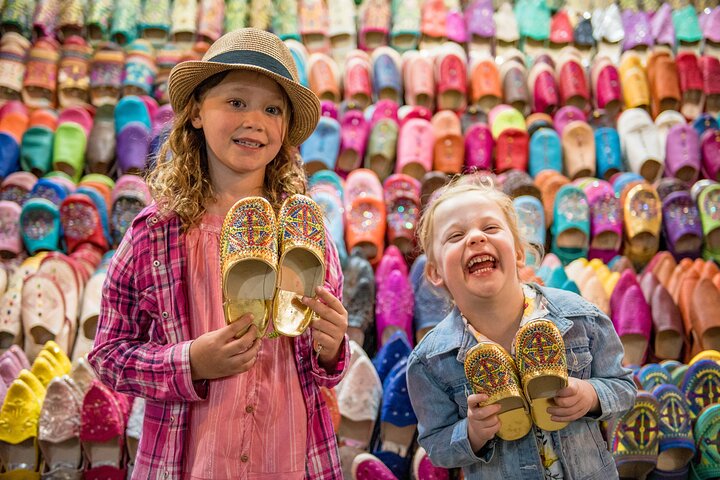
- Traditional leather workshops: Watch the creation of Morocco’s iconic heelless slippers (balghas), as well as handmade wallets, belts, bags, and shoes.
- Cultural heritage stops: Discover the Farnatchi, where locals still cook in wood-fired ovens and learn how public hammams have operated since Roman times, plus an age-old bakery where bread is baked the traditional way. We added these to make the tour extra unique.
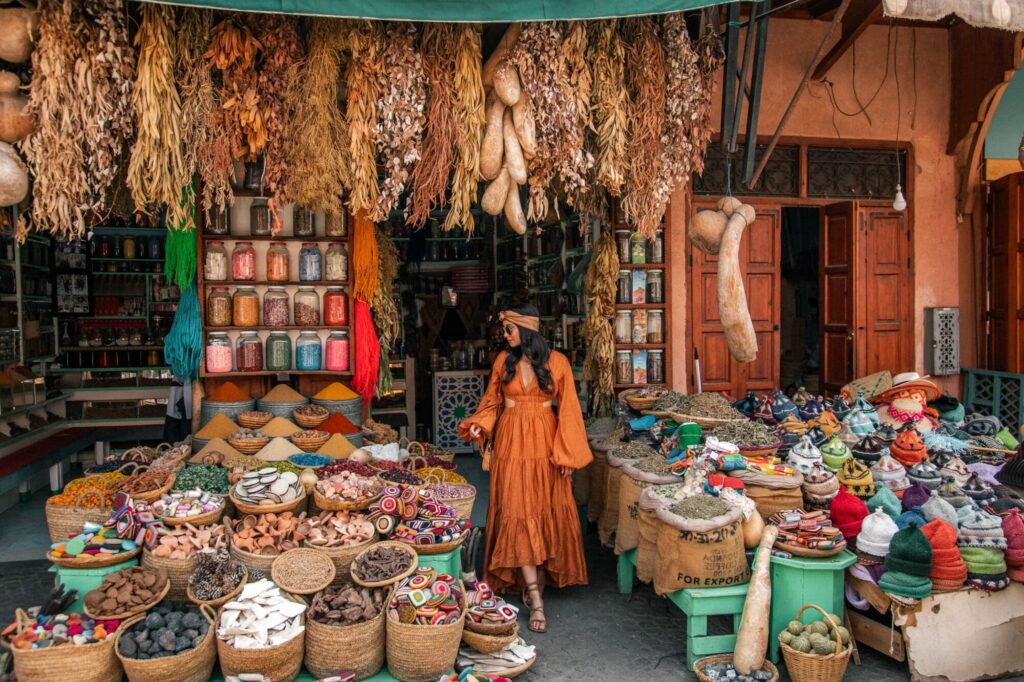
- Herbal and spice shops: Sip Moroccan mint tea, sample local pastries, and explore aromatic herbs, spices, and essential oils while learning about their uses and history.
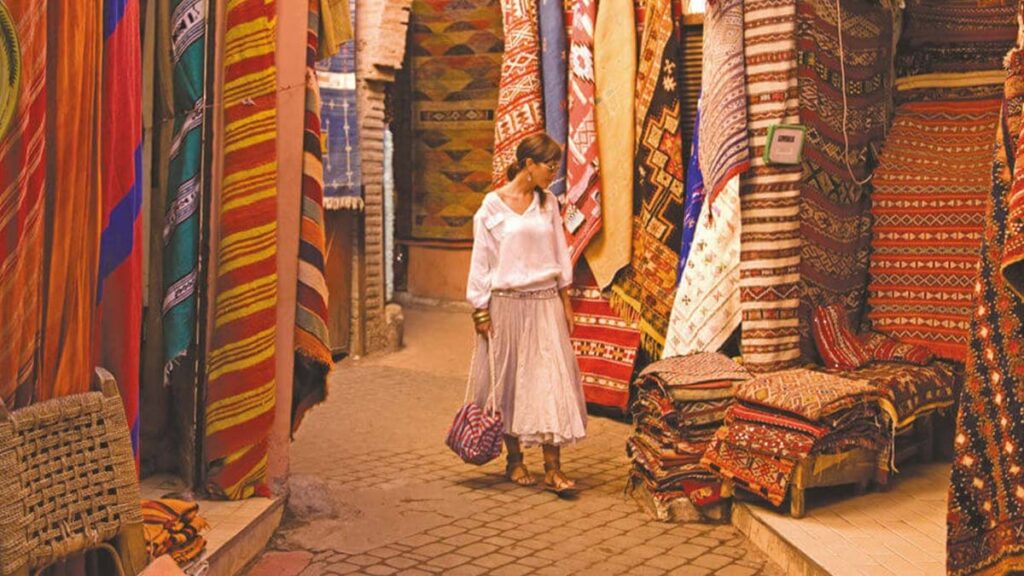
- Carpet and textile workshops: Admire traditional woven Moroccan carpets and Berber boucherouite rugs, full of character, charm, and stories — perfect for culture lovers and photography enthusiasts alike.
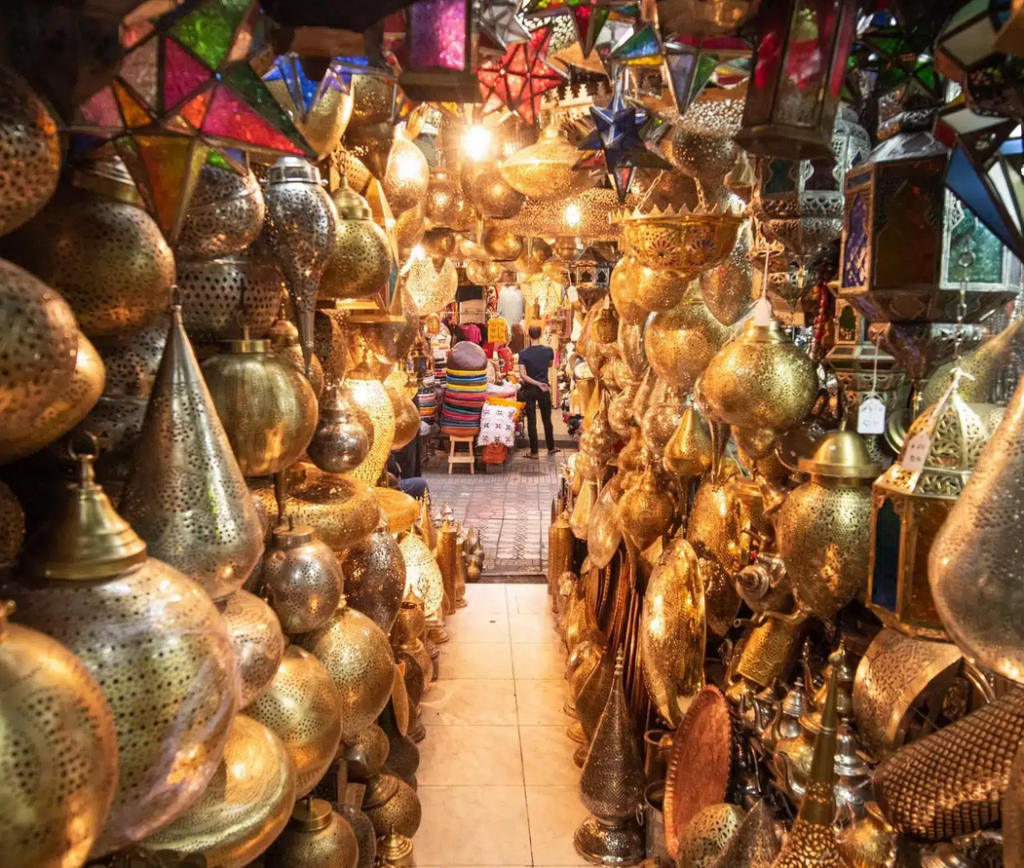
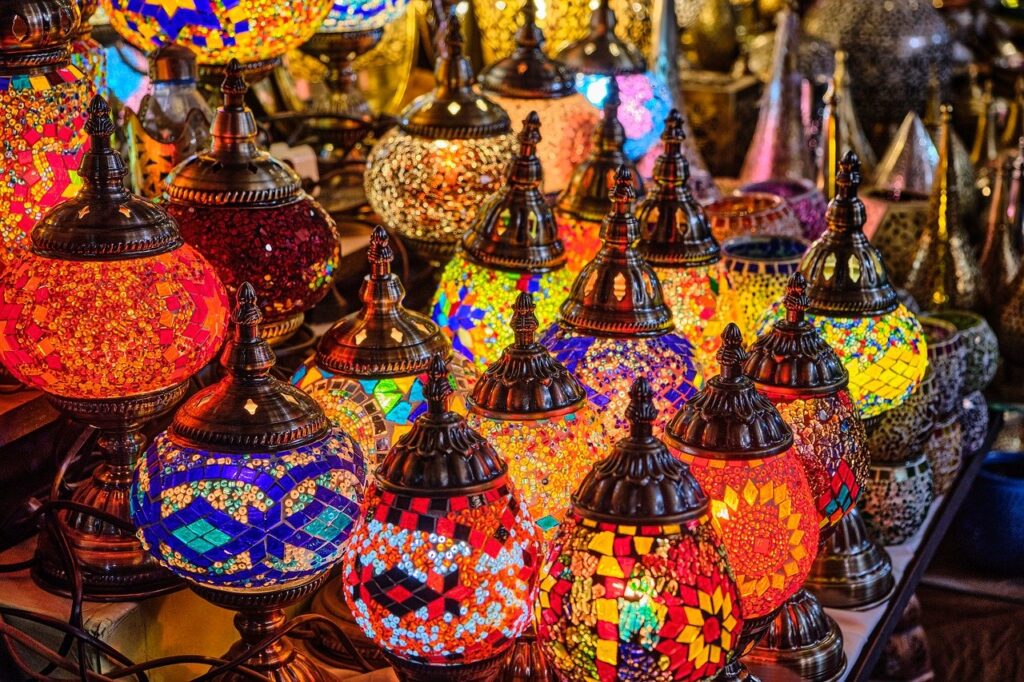
- Brass lamps & lanterns gallery: Even if you don’t plan to buy, this glittering gallery provides a visual feast, featuring everything from small candleholders to elaborate multi-story chandeliers.
With the genuine care our team has brought to travelers for nearly a decade, and with local knowledge by your side, you can focus on enjoying the souks without guessing where to shop or what to prioritize. Whether you’re seeking authentic souvenirs, cultural insight, or photo-worthy moments, our team ensures a smooth, engaging, and memorable experience throughout the medina.
Whether it’s your first visit or your fifth, book your Private Marrakech Souks Shopping Tour, or click on the "Book now" button below, and discover the souks of Marrakech with confidence, ease, and authentic local insight.
If you have any questions or want a more focused, customized experience of the souks, don’t hesitate to contact us — we’d be very happy to help.