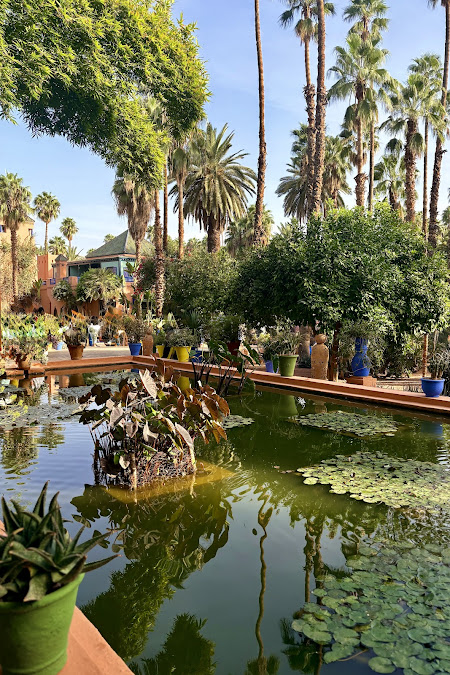
Jardin Majorelle is one of Marrakech’s most iconic attractions. Its vivid blue walls, exotic plants, and artistic history appear on postcards, guidebooks, Instagram travel feeds, and in countless “top 10” and “must-see” lists. Visitors from around the world come to see it, drawn by its beauty and charm.
At the same time, it is also one of the most misunderstood spots in the city. Expectations can be very high, and it can absolutely be a highlight of your trip; but the reality is a little more nuanced. From our experience welcoming travelers year after year, the visit is most rewarding when people understand what it is and what it isn’t before they step through the gate.
This guide is meant to do just that: help you decide if Jardin Majorelle fits into your time in Marrakech, and how to experience it in a way that feels calm, smooth, and enjoyable rather than rushed or overwhelming.
What Jardin Majorelle Actually Is
At its core, Jardin Majorelle is a botanical garden created in the 1920s by French painter Jacques Majorelle, who settled in Marrakech and designed the space as a living artwork. In the 1980s, it was restored and preserved by Yves Saint Laurent and Pierre Bergé. Their foundation later opened it to the public, and it is still managed by the same team, making it both a cultural landmark and a peaceful escape from Marrakech’s busy streets.
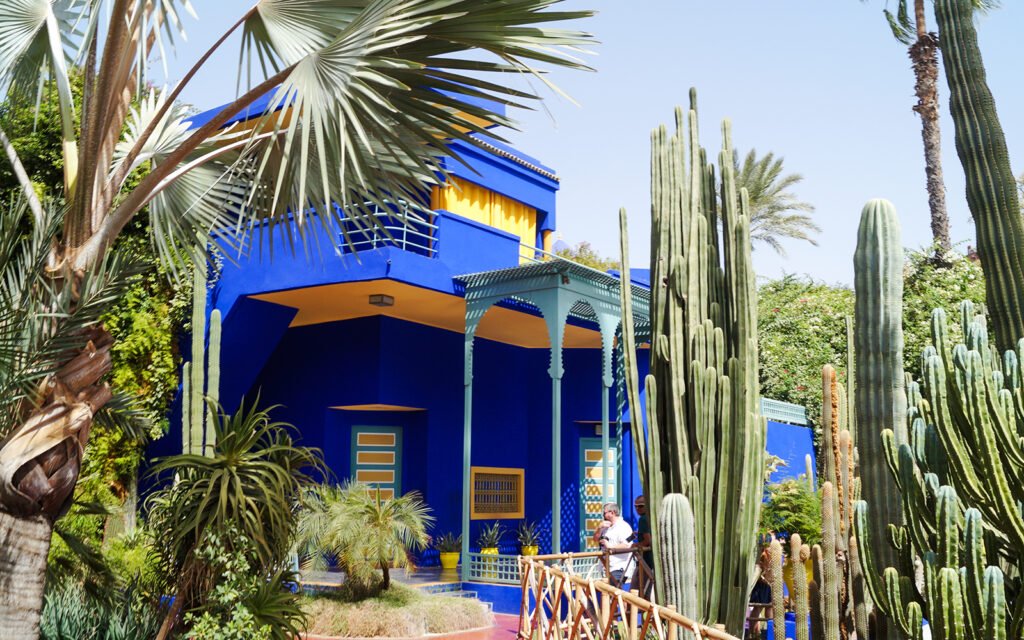
Jaridn Majorelle is not a traditional “Moroccan” garden in the historical sense. It’s a very curated, artistic space — part botanical collection, part design statement. The bold cobalt blue (now known worldwide as “Majorelle Blue”) is intentional, dramatic, and central to the experience.
The garden itself is fairly compact. In practice, most visits last 30 to 45 minutes, unless you also spend time in the museums on site. That scale matters. Many visitors arrive expecting something sprawling and leisurely, and can feel rushed when they realize how compact it is, especially during busy hours. This is not a place to wander for an entire afternoon. It’s a focused, immersive pause.
What usually matters most is not the size though, but the atmosphere. The vivid blue walls, the contrast with deep greens, the exotic plants from five continents, the sound of water, and the careful layout all combine to create a calm, restorative feeling that is very different from the rhythm of the Medina.
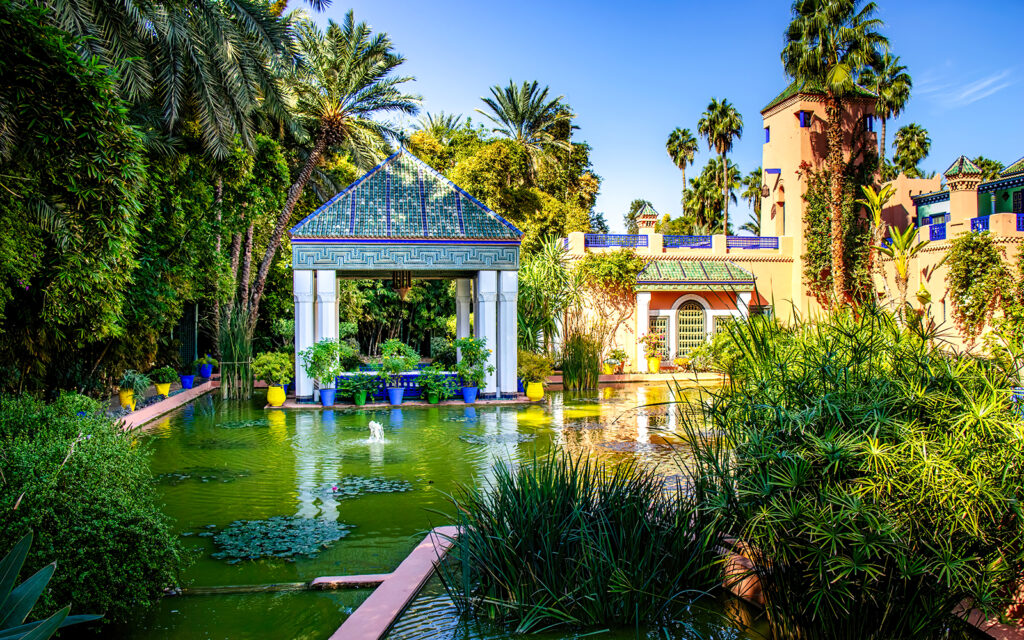
Why Is Jardin Majorelle So Popular (and Why That Matters)
Jardin Majorelle’s popularity didn’t happen by accident. It is visually striking, easy to navigate, and meticulously maintained. For travelers with limited time in Marrakech, it feels accessible and predictable — a calm contrast to the sensory intensity of the Medina.
The appeal comes from a mix of factors:
- Instagram-worthy visuals and a striking color palette: bold blue walls, yellow accents, and deep green foliage
- Its connection to fashion and art history through Yves Saint Laurent
- Compact beauty: the garden can be experienced fully in under an hour
- Central location in the modern Guéliz area
That said, many visitors expect a sprawling botanical park and are surprised by how small and deliberately curated the garden actually is.
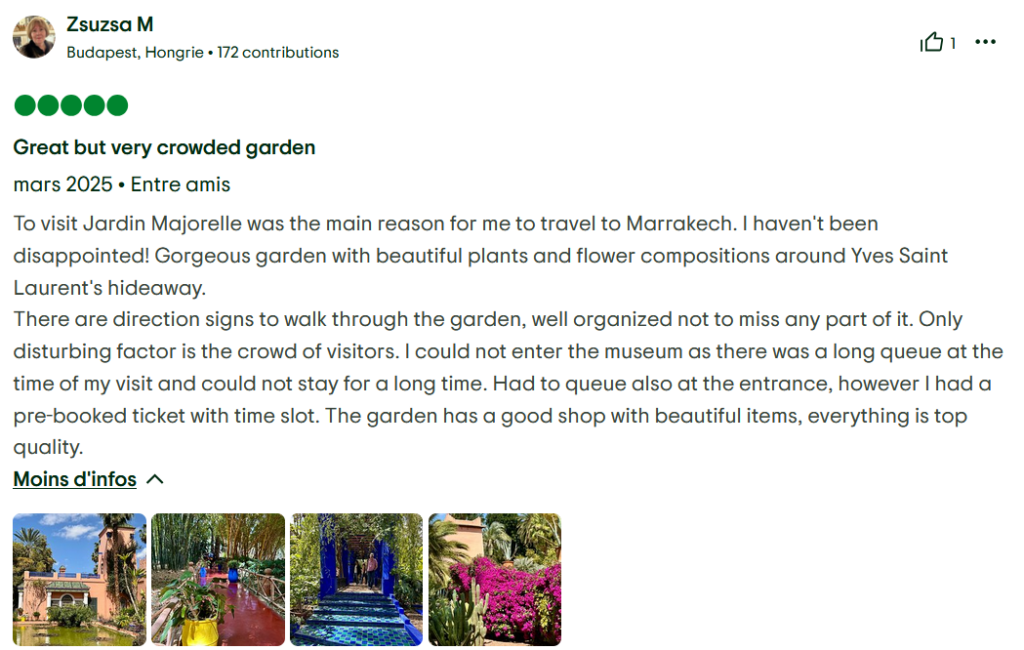
Popularity also comes with trade-offs. From our experience, the main source of disappointment for some visitors is crowding. Even with timed-entry tickets, certain hours feel dense. Photography slows movement, narrow paths create bottlenecks, and the sense of calm people anticipate can disappear quickly.
This doesn’t mean the garden isn’t worth visiting. It means timing and expectations matter more here than in almost any other part of the city. Understanding this upfront is what turns the visit into a very enjoyable highlight rather than a frustration.
When to Visit: Timing Is Everything
If you take only one practical tip from this guide, let it be this: book the earliest available time slot!
Early morning visits are noticeably different from late morning or midday ones. The light is softer, the air cooler, and people move more gently. There’s space to pause without feeling in the way. Paths are less crowded, and the garden feels closer to the calm, curated image most visitors imagine.
Late mornings and early afternoons are typically the busiest, especially from October through April. Many travelers plan Jardin Majorelle as a mid-morning stop, which creates predictable congestion. The paths are narrow, and when the garden fills, movement becomes slower and more stop-and-go.
Afternoons can work, but during warmer months the heat is more noticeable, and during peak tourist seasons the garden rarely feels quiet. If you aren’t an early riser, the very last slot of the day can be rewarding. The light softens, the “Majorelle Blue” deepens, and the birds in the canopy become particularly active.
From what we see on the ground, the busiest times are:
- Mid-morning (around 10:00–12:00)
- Late afternoon
- Weekends and public holidays
A quick look at what each season feels like in the garden:
- 🌸 Spring (March–May): Lush, colorful, and popular. Beautiful but busy.
- ☀️ Summer (June–August): Hot and quieter than you might expect, though less comfortable if sensitive to heat.
- 🍂 Autumn (September–November): Balanced and pleasant, though crowds return quickly.
- ❄️ Winter (December–February): Cooler, calmer, with soft morning light. Often a favorite for photographers.
Best hours to visit by season:
- Spring & Autumn: 8:30–10:00 AM (right after opening) or after 4:00 PM
- Summer: 8:00–9:30 AM only; midday heat can be intense
- Winter: 10:00–11:30 AM; mornings are cool, late morning light is ideal
📝 Additional Notes:
1. Jardin Majorelle now operates on timed-entry tickets, and booking in advance is strongly recommended, especially during peak travel months. Many travelers assume they can simply show up and walk in, and are surprised to find long lines or no availability for the next few hours.
Many travelers are surprised by how strictly entry times are managed. Tickets are timed, and late arrivals may not always be accommodated. This isn’t about being unfriendly; it’s simply the only way the garden can function given its popularity and limited space.
2. Early morning slots do sell out quickly, so planning ahead makes a real difference here.
How to Buy Tickets (Important!)
⚠️ Jardin Majorelle does not sell tickets at the gate anymore.
✅ Official Ticket Purchase
- Tickets must be purchased online in advance.
- Time slots are strictly enforced.
- Entry without a ticket is not guaranteed — bring your voucher on your phone or printed.
- There is no reliable same-day ticket purchase at the gate.
- Be extremely cautious with agencies or guides who promise same-day tickets; these are rarely reliable.
- For the best time slots, book at least 2–3 days in advance during low season, and about a week ahead during high season.
From our experience, the single biggest source of frustration is travelers arriving without tickets, assuming they can “just pop in.” Jardin Majorelle doesn’t work that way anymore, and understanding this in advance makes the visit much smoother and more enjoyable.
How to Buy Tickets: Step by Step
1. Go to the official Jardin Majorelle website
This is the only reliable way to purchase tickets. Avoid third-party promises of same-day access or resellers on large travel platforms — these are often unreliable and might lead to frustration at the gate.

2. Choose which site(s) to visit
If your time is limited, it’s perfectly fine to visit Jardin Majorelle alone. Otherwise, you can combine it with the Berber Museum, the Yves Saint Laurent Museum, or both.

Then, select your nationality from the dropdown list.
3. Select your tickets
Choose the number and type of tickets you need. Admission is free for children under the age of 10.
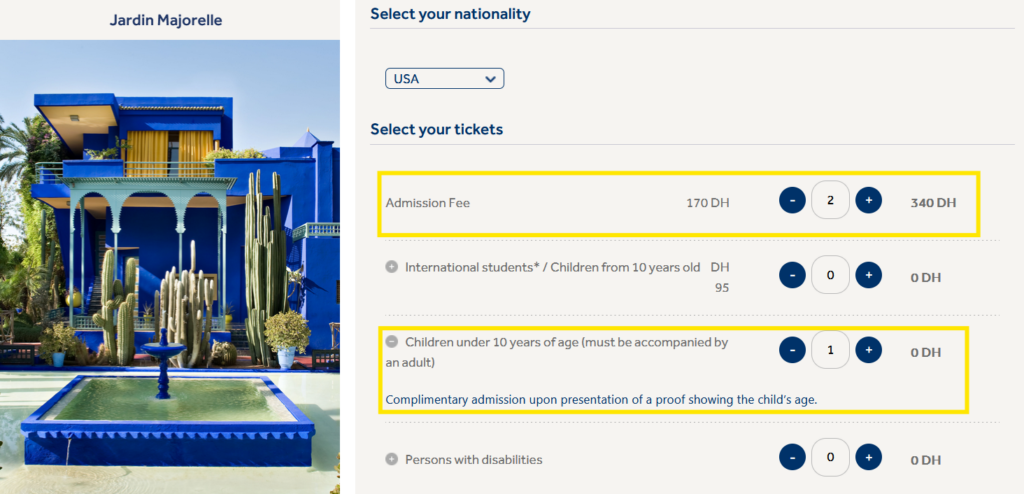
4. Choose your date & time of visit, then click on "Next Step"

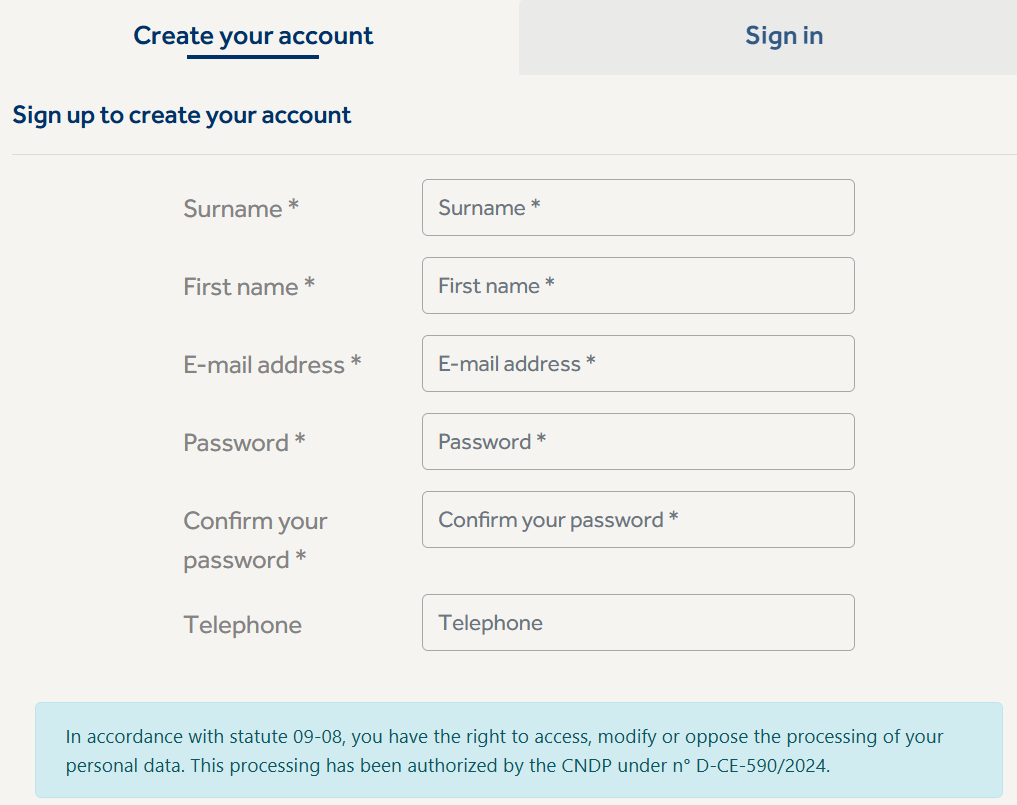
5. Fill in your details and create an account, then click on "Next Step"
6. Choose your payment method, then click on "Payment"

7. Finalize your payment
Enter your credit card details to complete the purchase.
Jardin Majorelle tickets are final — they are not exchangeable or refundable, so double-check your date, time slot, and ticket types before confirming.
The Garden Experience: What People Love — and What They Don’t
Once inside, the experience is fairly structured. Paths are clearly defined, signs are minimal, and movement flows in a predictable way. This isn’t accidental, it helps manage the number of visitors and protects the plants.
A few practical notes:
- Photography is allowed, but tripods and commercial shoots require special permission.
- Seating is limited. This is more of a walking garden than a place to sit and linger.
- Shade exists, but on very hot days it can still feel warm, especially around midday.
The plant collection itself is impressive, particularly if you enjoy cacti, succulents, bamboo, water lilies, palms, and desert-adapted species from around the world. Even guests who don’t usually consider themselves “garden people” often appreciate the diversity once they slow down and take a closer look.
From our experience, people tend to enjoy:
- The garden’s strong visual identity and bold colors
- The shade, water features, and quiet corners
- The sense of stepping briefly out of the city
Some aspects visitors often don’t expect:
- The garden is structured and directional
- There’s limited space to wander freely
- It isn’t designed for solitude during busy hours
- Plants are arranged more for artistic impact than traditional botanical display
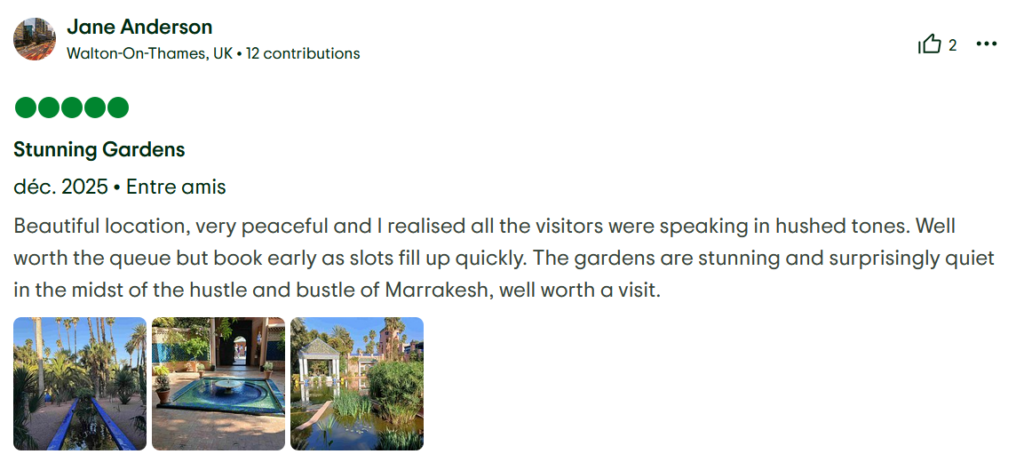
This doesn’t make the experience lesser, it just makes it different from a large public park or a historic riad garden. What usually matters most is letting go of the idea that this is a hidden oasis. Jardin Majorelle is a carefully curated, internationally known site, and the visit is most enjoyable when appreciated on those terms.
Is Jardin Majorelle Right for You?
This is a question worth asking honestly.
✅ You’re likely to enjoy Jardin Majorelle if you:
- Appreciate design, color, and visual harmony
- Don’t mind sharing space with others
- Enjoy curated, intentional environments
- Want a calm contrast to the Medina
- Value visiting iconic places, even briefly
- Are comfortable with popular sites that are well-organized
❌ It may not be your favorite stop if you:
- Strongly dislike crowds
- Prefer raw, unpolished experiences
- Are seeking deep historical immersion
- Want a long, slow garden visit
- Are short on time and prioritizing historic sites
Neither reaction is right or wrong. Marrakech offers so many layers, and part of traveling well here is choosing what genuinely aligns with your interests and pace.
The Museums: Are They Worth It?
Within the Majorelle complex, there are two main museums:
- The Berber Museum
- The Yves Saint Laurent Museum (located just outside the garden entrance)
Whether they’re worth your time depends on your interests and your overall pace in Marrakech. If your schedule is tight, it’s perfectly reasonable to focus on the garden itself and save the museums for another visit.
The Berber Museum
This is a small but well-curated space showcasing Amazigh (Berber) jewelry, textiles, and objects from different regions of Morocco. It’s not exhaustive, and it’s not interactive, but it offers a grounded introduction. From our experience, travelers who appreciate cultural context often find it more meaningful than they expect.
The museum provides a quiet way to learn about Morocco’s indigenous cultures without feeling overwhelming. It won’t replace a deeper exploration elsewhere, but it adds useful texture to your understanding of the country.
Worth visiting if you want:
- Insight into Morocco’s indigenous cultures
- To see jewelry, textiles, and traditional objects
🕒 Visit time: 20–30 minutes

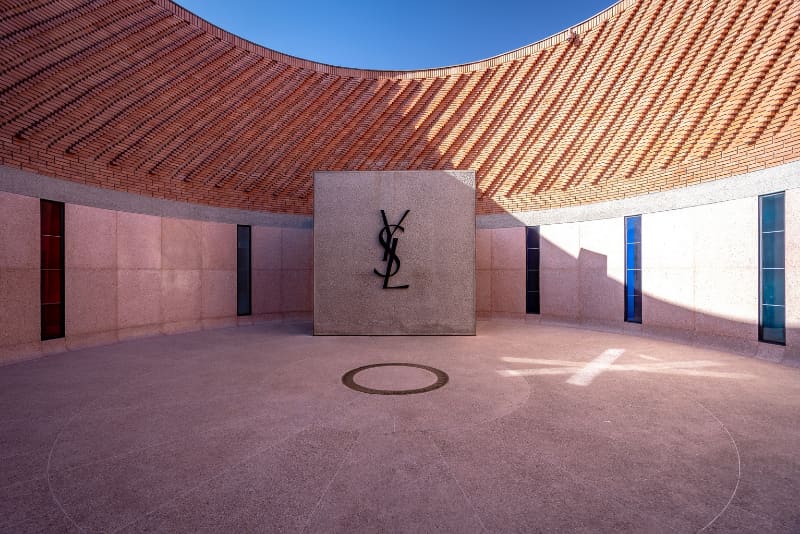
The Yves Saint Laurent Museum
This museum is most rewarding for travelers with a genuine interest in fashion, design, or the creative process. The building itself is beautifully designed, and the exhibitions are thoughtfully presented.
If fashion isn’t a particular interest, it’s perfectly reasonable to skip this museum.
Worth visiting if you love:
- Fashion, design, and modern art
- Temporary exhibitions
🕒 Visit time: 45–60 minutes
Photography: Managing Expectations
Jardin Majorelle is famously photogenic, but in practice, photography there can be trickier than many expect. The light is strong, the colors are intense, and during busy hours there’s limited opportunity to compose shots without people in the frame.
From our experience, travelers who get the most out of photographing the garden tend to:
- Visit early in the day
- Focus on details rather than wide, sweeping scenes
- Accept that the garden is a shared space
Trying to recreate specific images seen online often leads to frustration. The garden changes subtly with the seasons, the light, and the flow of visitors, so what works one day may not on another.

Photography Tips That Actually Work at Jardin Majorelle
- Stand slightly off-center at the blue villa doors.
Most people line up straight on. If you step half a pace to the left or right, you avoid reflections, soften the symmetry, and let the blue read deeper rather than flat. - Shoot upward along the bamboo path, not straight ahead.
On the bamboo walkway, pointing the camera forward almost always catches people. Tilting upward lets the bamboo frame the sky and filters out the crowd below. - Use the yellow pots as foreground anchors.
Many travelers photograph the pots head-on. Try placing one low in the corner of the frame with the blue wall behind it. It creates depth and avoids faces in the background. - Photograph the blue in shade, not sun.
The deepest Majorelle blue appears when the wall is fully shaded. Direct sun flattens it. This surprises many visitors. - Use vertical framing at doorways and stair edges.
Vertical composition lets you crop out shoulders and heads while keeping architectural lines intact.
What to Wear if Photography Matters
- White, cream, or soft beige photograph cleanly against the blue.
These tones reflect light without competing with the walls. Bright white works best in shade, less so in direct sun. - Earth tones beat bold colors.
Olive, sand, rust, and muted terracotta sit well with the plants and pots. Strong reds, purples, or neon shades tend to clash and pull focus away from the garden. - Avoid wearing the same blue as the walls.
This is a common mistake. Majorelle blue is so dominant that similar tones disappear or look mismatched on camera. - Simple shapes work better than busy patterns.
The garden is already visually dense. Clean lines read calmer, especially in tight frames. - Comfort still matters.
Paths are uneven in places and you’ll be standing and moving more than posing. Shoes that allow you to step aside quickly make the visit easier for everyone.
How Jardin Majorelle Fits Into a Day in Marrakech
Jardin Majorelle is easiest to visit first thing in the morning. It’s outside the Medina, so it works well before heading into the old city rather than after. Many travelers plan it early, then move on to lunch or a quieter neighborhood before tackling the souks later in the day.
The Most Effective Way to Schedule Jardin Majorelle if You’re Short on Time
Jardin Majorelle can be easily included as part of your private Highlights of Marrakech city tour with us. You simply need to purchase your tickets in advance, following the step-by-step guide mentioned earlier in this article, and we’re happy to include the stop and take you there. In practice, this works very smoothly, saves you a lot of time moving between locations.
For ticket timing, these combinations usually work best:
- 9:00 am pickup: book Jardin Majorelle for 9:30 am (or 12:30 pm if you prefer to end the visit there)
- 10:00 am pickup: book 10:30 am (or 1:30 pm to finish there)
- 2:00 pm pickup: book 2:30 pm (or 5:30 pm to finish there)
A Thoughtful Way to Frame your Visit
What we often suggest is to see Jardin Majorelle not as the highlight of Marrakech, but as a moment within it.
It’s a place to slow your breathing, notice color and form, and reset your senses.
When approached that way, it usually delivers exactly what it promises. It becomes less about checking a box and more about simply noticing something beautiful, in a city that is full of surprises.