No trip to Marrakech feels complete without a stroll, or three, through Jemaa el-Fna. It’s the city’s beating heart: lively, colorful, a little overwhelming at first, but impossible to forget. Whether you wander through in the daytime or dive into the evening buzz, this legendary square has a way of pulling you right in. If it’s your first visit, think of this as a simple, friendly guide to help you enjoy it with confidence.
What Exactly Is Jemaa el-Fna?
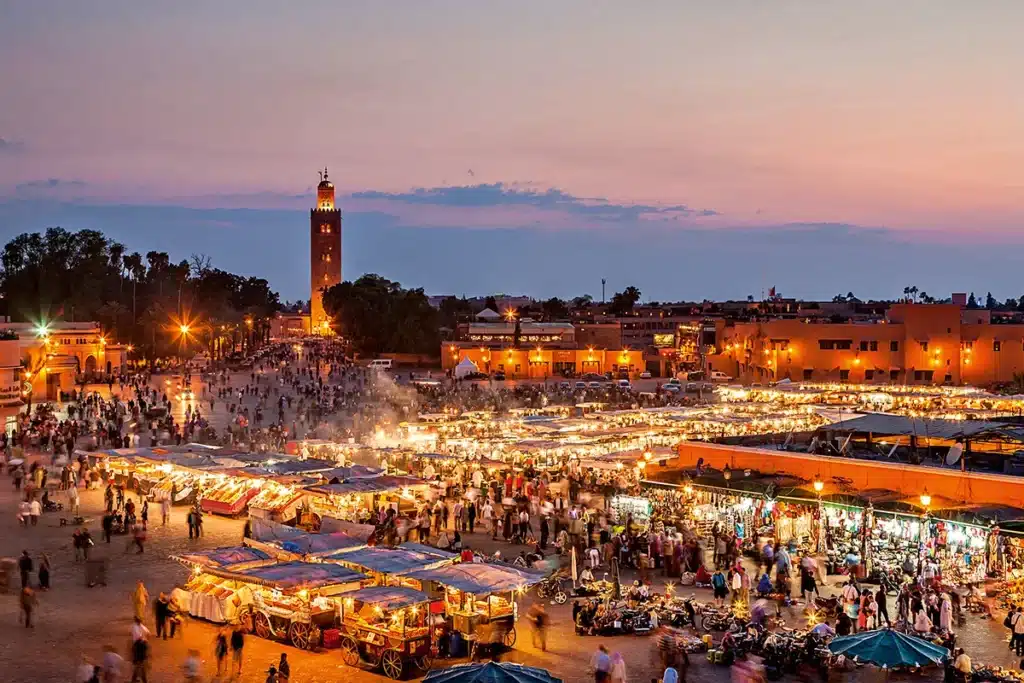
Jemaa el-Fna isn’t just a square. It’s a living stage, one that’s been playing out daily life for centuries. Long ago, it was where desert caravans met mountain traders, where news was shared, deals were made, and stories were told out loud. That spirit never left.
Today, it’s still where Marrakech comes together to eat, perform, watch, listen, and simply be. Storytellers, musicians, food vendors, and passersby all share the same space, creating something that feels spontaneous and deeply rooted at the same time. That’s why UNESCO recognized Jemaa el-Fna as a "Masterpiece of Oral and Intangible Heritage of Humanity". This title sounds grand, but the moment you’re there, it clicks.
Go in the Evening for the Full Effect
During the day, Jemaa el-Fna has its own charm. A few performers, fresh juice stalls, people drifting through. But once evening falls, the square completely comes alive. As the sun sets and the call to prayer floats over the rooftops, food carts roll into place, lanterns flicker on, and the air fills with the smoky scent of cumin and charcoal.
Suddenly, everything is happening at once. Musicians beat out rhythms, storytellers gather tight circles of listeners, and every corner seems to demand your attention. You’ll spot small crowds around impromptu games too, from simple street gambling to playful challenges like trying to fish a Coca-Cola bottle with a cane, all part of the square’s lively, old-school entertainment.
Families stroll arm in arm, kids weave through the crowds, teens linger with friends, and neighbors bump into each other over a quick bite. It feels spontaneous, chaotic, and wonderfully human.
If you can, come more than once. Catch the quieter rhythm during the day, then return after dark to see the transformation. But if you only have time for one visit, go at sunset. That’s when Jemaa el-Fna truly feels like Marrakech’s living room.
What to Eat (and How to Survive the Food Stalls)
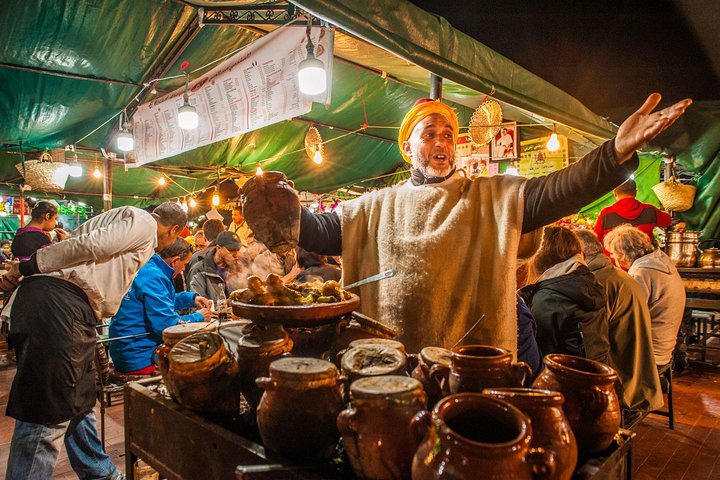
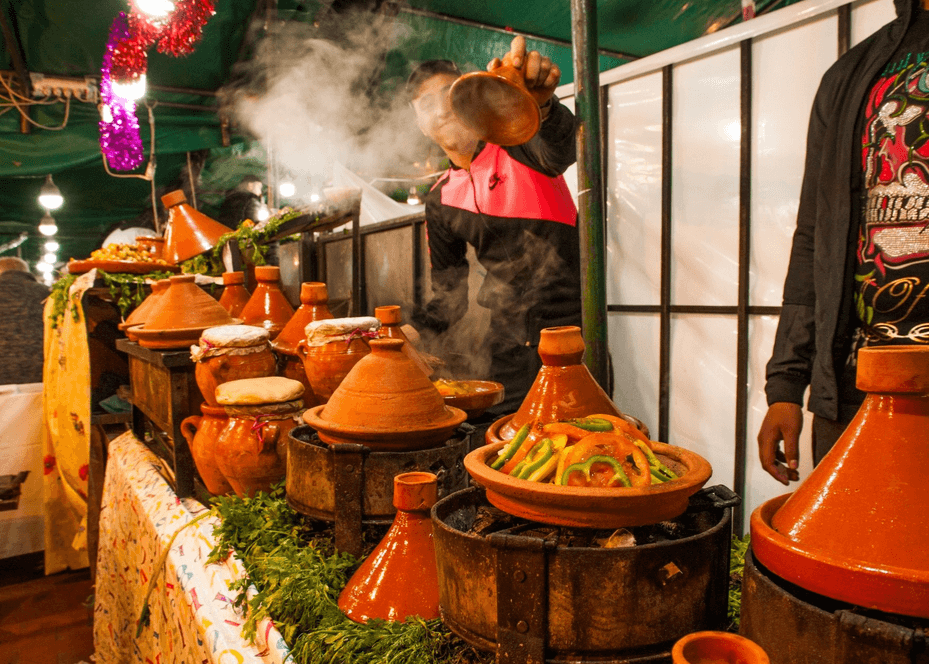
Food is one of the main reasons people flock to Jemaa el-Fna at night. As the sun goes down, long rows of food stalls roll in, each with benches, handwritten menus, and enthusiastic waiters doing their best to wave you over. It can feel a little intense at first, but that’s part of the fun.
A simple rule of thumb: follow the locals. Stalls filled with Moroccans usually mean fresher food, quicker turnover, and a livelier atmosphere.
Some classics worth trying:
- Harira soup — a comforting tomato and lentil soup, gently spiced and deeply satisfying. It’s traditionally eaten to break the fast during Ramadan, but you’ll find it year-round here.
- Grilled lamb or merguez sausages — smoky, juicy, and served hot with chunks of bread for scooping.
- Bissara — a thick fava bean soup that’s humble, hearty, deeply comforting, and surprisingly addictive.
- Snails — don’t dismiss them too quickly. They’re simmered in a fragrant, spiced broth that locals sip like tea once the bowl is empty.
One insider note: stall numbers don’t always match guidebook recommendations, because vendors change spots. Trust your eyes, your nose, and the energy of the crowd around the benches.
Pro tip: prices are generally reasonable, but always glance at the menu before sitting down so there are no surprises.
Fresh Juice, Everywhere
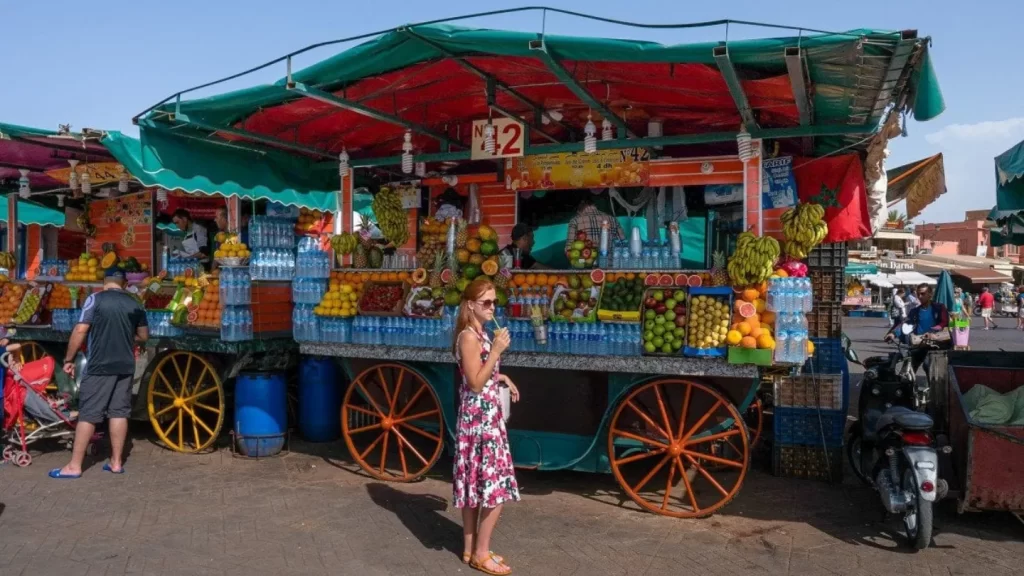
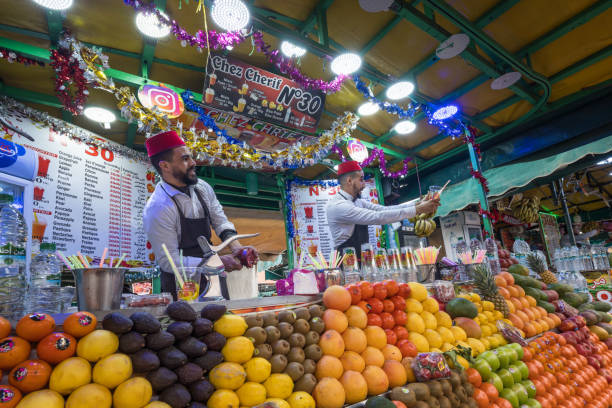
One thing you truly can’t miss in Jemaa el-Fna? The fresh juice stands. Dozens of vendors line the square with pyramids of oranges stacked sky-high, calling you over for a glass. It’s affordable, refreshing, and very much a Marrakech rite of passage.
The orange juice here is simple and incredible. Freshly squeezed, naturally sweet, and perfect after wandering the square. One small tip though: some vendors add ice or a bit of water. If you want the real deal, ask for it “sans glaçon” (no ice) and have them squeeze the oranges right in front of you. And stick with classic orange juice over the mixed “cocktails” — those can sometimes be overly sweet.
So why is Moroccan orange juice so good? It comes down to the fruit itself. Local oranges grow in an ideal climate, with hot days and cool nights, and they’re picked when fully ripe. The result is juice that’s naturally sweet, vibrant, and doesn’t need any added sugar. One sip, and you’ll understand why locals keep coming back for more. 🍊
Performers: The Soul of the Square
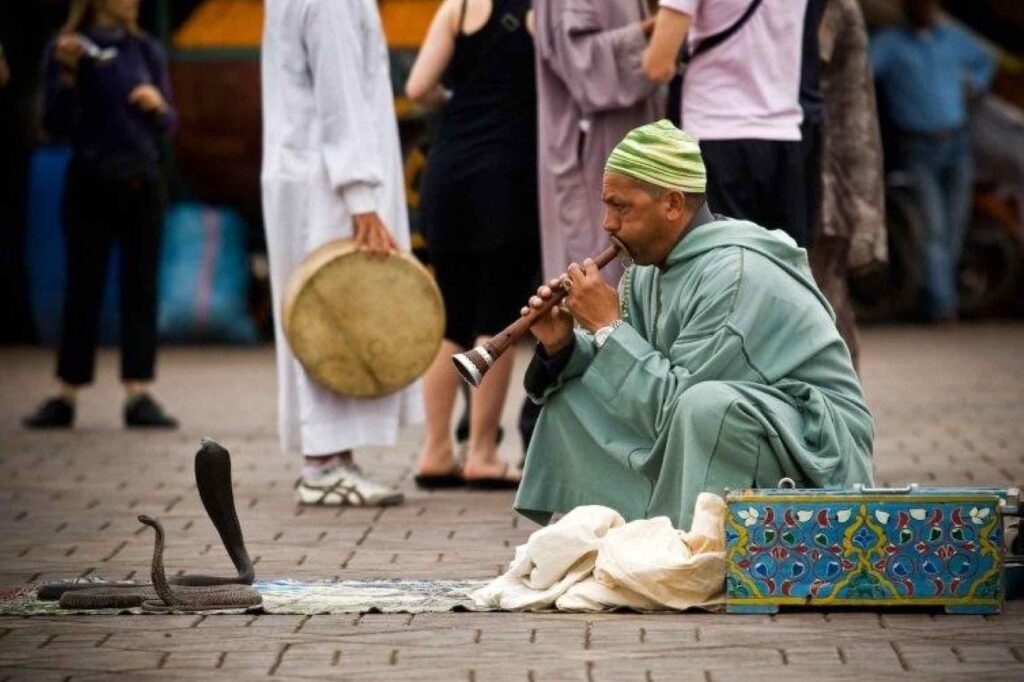
This is where Jemaa el-Fna really shows off. Snake charmers, acrobats, henna artists, musicians... it’s all part of the chaos. But look a little closer, and you’ll catch the heritage behind every move and sound.
- Gnaoua musicians with their heavy metal castanets and three-stringed guembri drums — descendants of sub-Saharan African spiritual music. Their rhythms are hypnotic and worth pausing for.
- Storytellers (halqa) — one of the square’s oldest traditions. Even if you don’t understand Arabic, the energy of the crowd and the gestures of the performer are fascinating.
- Water sellers in red costumes with brass cups — mostly there for photos nowadays, but they’re a nod to an older Marrakech before bottled water existed.
It’s usually fine to take photos, but always ask first. A small tip of 10–20 dirhams to show appreciation is polite.
Rooftop Escape: The Best View Is from Above
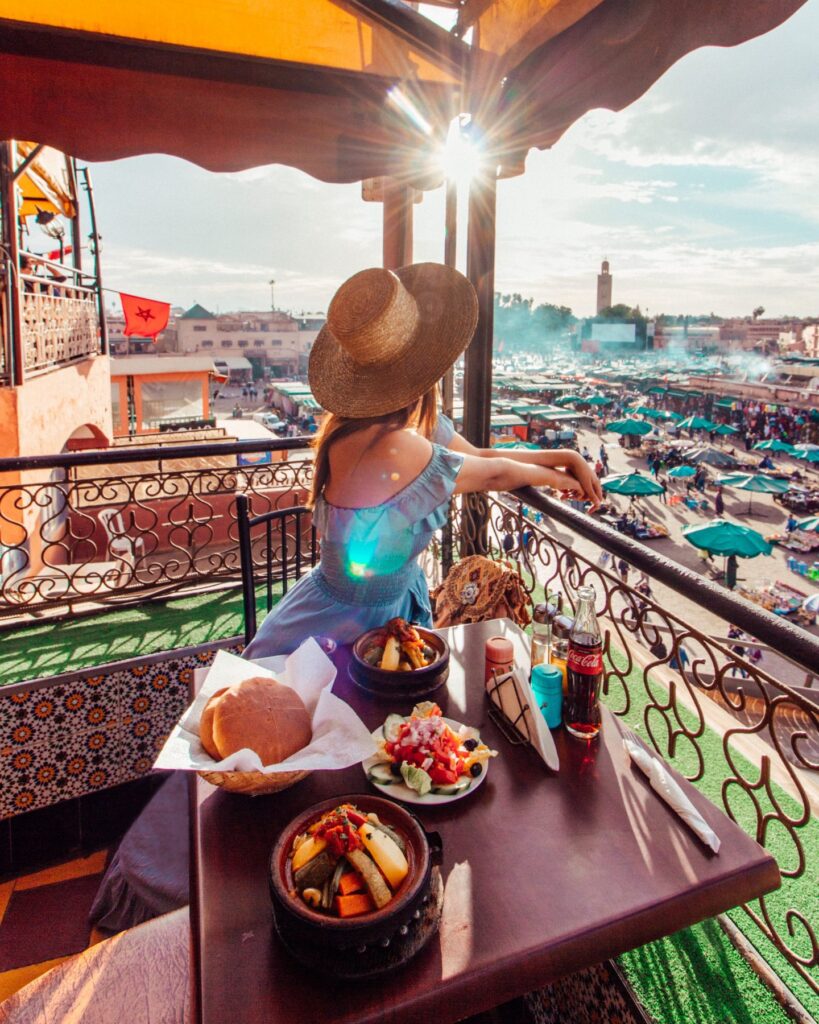
After a while, the crowds can start to feel overwhelming. Here’s the insider move: retreat to one of the rooftop cafés that line the square. Grab a mint tea, claim a good spot, and just watch. From above, the chaos transforms into a living mosaic — smoke curling from the grills, drums echoing across the square, and lanterns flickering in the night air.
The Café de France balcony is famous for a reason, but lesser-known spots like Café Glacier offer just as stunning views with fewer people. It’s the perfect way to take it all in and let the square’s energy wash over you from a more relaxed perspective.
A Few Things to Keep in Mind
- Photo etiquette: Musicians, snake charmers, and monkey handlers usually expect a small payment if you take a photo. If you don’t want to, keep your camera low and enjoy the scene without snapping.
- Watch your belongings: The square is generally safe, but it’s busy, and pickpocketing can happen.
- Henna caution: Only get henna from women using clean tools and dark brown paste. Bright orange “quick” henna can be unsafe.
- Take it lightly: Some people will try to sell you things, guide you, or grab your attention. Smile, say “no, thank you” (or la, shukran in Arabic), and keep walking if you’re not interested.
- Take your time: The square isn’t a checklist. Wander, soak it in, and come back at different times of day to see it transform.
Parting Note
Jemaa el-Fna isn’t just another tourist stop... It’s where Marrakech shows you its soul: loud, colorful, and unapologetically authentic. It can feel overwhelming at first, but once you settle into the rhythm, it becomes a memory you’ll carry long after your trip.
If you want to experience the best bites and uncover the hidden stories of the square without the stress of choosing a stall or missing the highlights, join our Authentic Marrakech Food Tour. We’ll show you Jemaa el-Fna like locals do — with full bellies, big smiles, and plenty of stories along the way.