Marrakech has many monuments that naturally draw attention: palaces, gardens, and riads hidden behind heavy wooden doors. But for those who spend a little time here, it becomes clear that mosques sit at the quiet center of the city’s daily life.
Travelers often ask us which mosque they should see. It’s a reasonable question, but it’s also slightly the wrong one. In Marrakech, mosques are not designed as visitor attractions. They are places of rhythm: prayer times structuring the day, neighbors, souk artisans, and vendors gathering, and a sense of continuity carried across centuries. Understanding the role mosques play and the meaning they hold usually matters more than ticking off a list.
That said, some mosques carry particular historical, architectural, and cultural weight. Even without entering, travelers often find themselves pausing nearby, drawn by their scale, craftsmanship, or the way life seems to move differently around them. They also offer some of the most rewarding architectural scenes in the city, places where it’s worth slowing down, observing the details, and taking time to find the right angle for a truly beautiful photograph.
Below, we explore five of the most important mosques in Marrakech, those that carry deeper significance in daily life and offer some of the city’s most striking aesthetics. We also touch on common misunderstandings travelers have about them, and how you can experience them meaningfully, even without going inside.
A quick note on visiting mosques in Marrakech
Before getting specific, it helps to be clear about access. Non-Muslims are generally not permitted to enter mosques in Marrakech. This often surprises travelers, especially those who have visited places like the Blue Mosque or Hagia Sophia in Istanbul, the Sheikh Zayed Grand Mosque in Abu Dhabi, or parts of Southeast Asia, where mosque interiors are open to visitors.
From our experience, this restriction can feel disappointing at first, but understanding the local context makes a difference. In Morocco, mosques are first and foremost active places of worship, deeply tied to neighborhood life. They are not curated spaces or museums. Respecting that boundary is part of engaging with the city as it is, rather than as we might expect it to be.
That doesn’t mean mosques are invisible or entirely off-limits. Their exterior architecture, their place within the cityscape, and the daily rhythms that move around them are very much part of public life. Taking the time to observe them from the outside often offers a deeper, more authentic insight into Marrakech than a brief interior visit ever could.
For context, the Hassan II Mosque in Casablanca is the only mosque in Morocco whose interior is open to non-Muslim visitors, outside of prayer times and through guided visits. In Marrakech, mosque interiors remain reserved for worship.
Koutoubia Mosque: the city’s anchor & main reference point
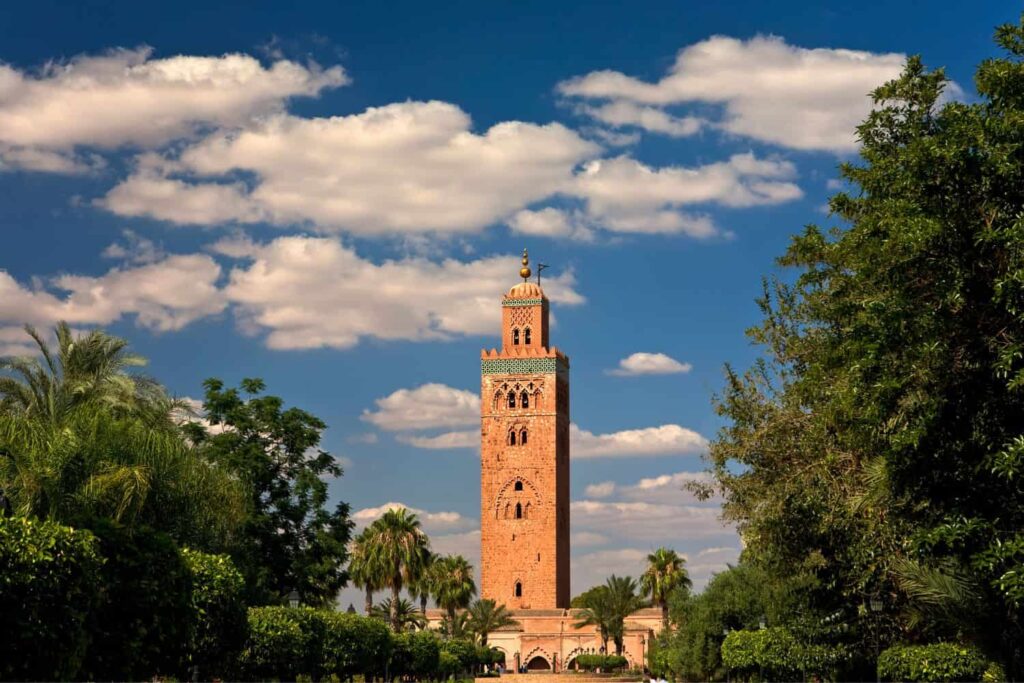
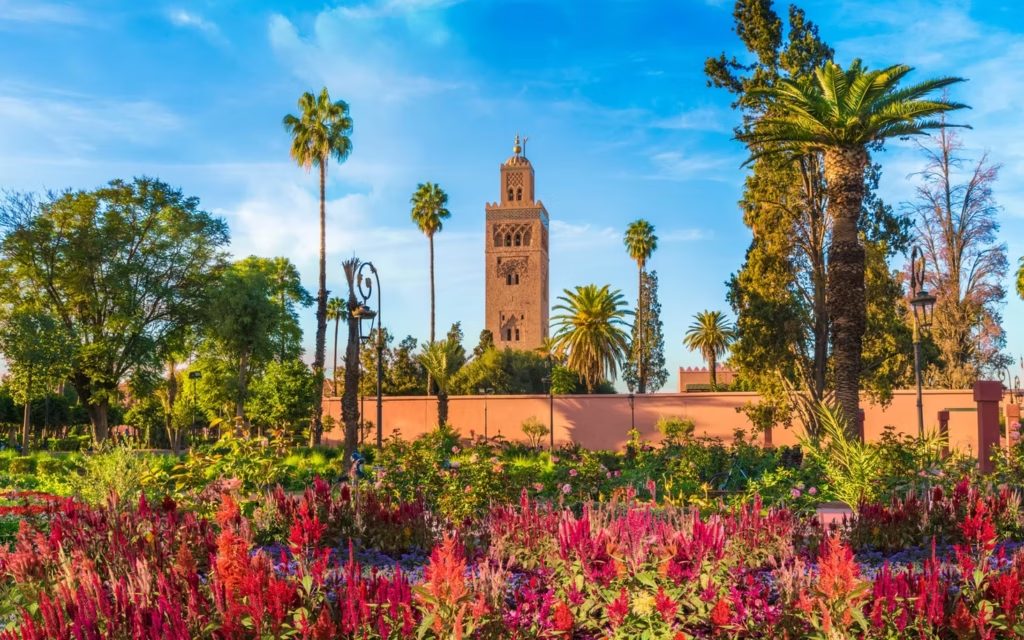
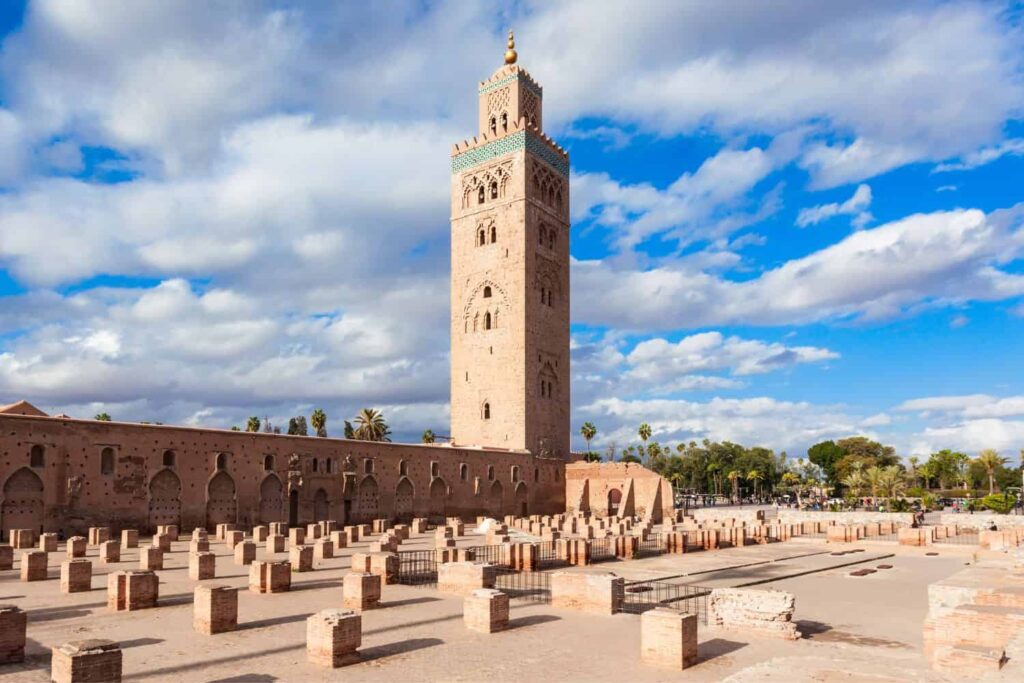
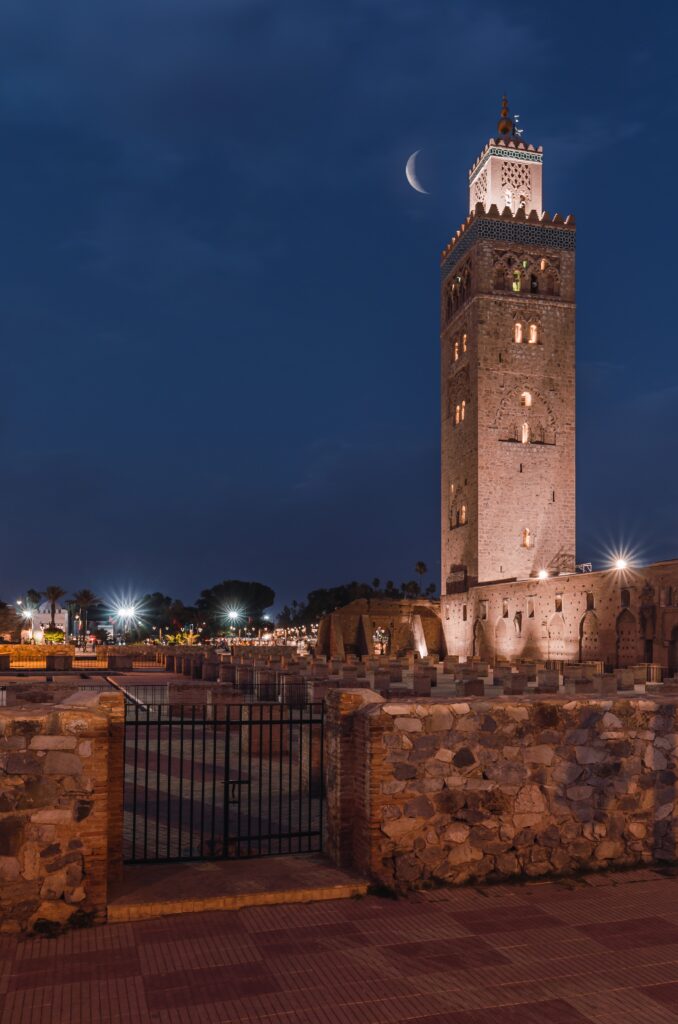
The Koutoubia Mosque is the most recognizable religious building in Marrakech, largely because of its minaret. At 77 meters high, it has shaped the city’s skyline since the 12th century and still serves as a visual reference point for locals and visitors alike. Its prominence makes it an anchor of the city, giving Marrakech much of its visual identity.
Many travelers assume the mosque’s importance is mainly symbolic or touristic. In reality, its role has always been practical. The minaret was designed to be seen from far away, helping people orient themselves in the city long before street signs or maps existed. Even today, many residents still use it instinctively to get their bearings and orient themselves in the winding medina streets.
Historical Significance
The Koutoubia was commissioned in the 12th century by the Almohad caliph Yaqub al-Mansur, during a period when Marrakech was a thriving imperial capital. Its name, derived from the Arabic “Kutubiyyin” (booksellers), reflects the nearby market of manuscript sellers, highlighting the area’s historical role as a center of learning and culture.
Architectural Brilliance
Architecturally, the Koutoubia Mosque is a benchmark of Almohad design. Its elegant proportions, understated decoration, and harmonious balance have influenced mosque construction across the western Islamic world. The minaret, with its square shaft, decorative arches, and intricate geometric motifs, served as a model for the Giralda in Seville, Spain, and the Hassan Tower in Rabat.
Inside, the mosque features a vast prayer hall and a serene courtyard, designed with functionality and spiritual focus in mind. The mihrab (prayer niche) is subtly adorned, emphasizing simplicity over extravagance, a hallmark of Almohad architecture.
Visiting Today
Non-Muslims cannot enter the mosque’s interior, as it is an active place of worship, but the exterior alone is a marvel. The gardens surrounding the mosque serve as a lively communal space where locals rest, families gather, and children play. The atmosphere is cheerful and welcoming, making it feel more like a park than just a historical site. Scenic walking paths and perfect photo opportunities abound, especially at sunset when the minaret glows in warm tones. For those exploring Marrakech, spotting the Koutoubia is not just a visual treat.. it’s a practical compass, guiding visitors through the medina’s labyrinthine streets.
Cultural Legacy
Beyond architecture, the Koutoubia Mosque remains a symbol of Marrakech’s spiritual and cultural heritage. Its influence on subsequent Moroccan and Andalusian mosques cements its status not just as a local landmark, but as a defining monument of Islamic art in the Maghreb.
Ben Youssef Mosque: Learning and Religion Intertwined
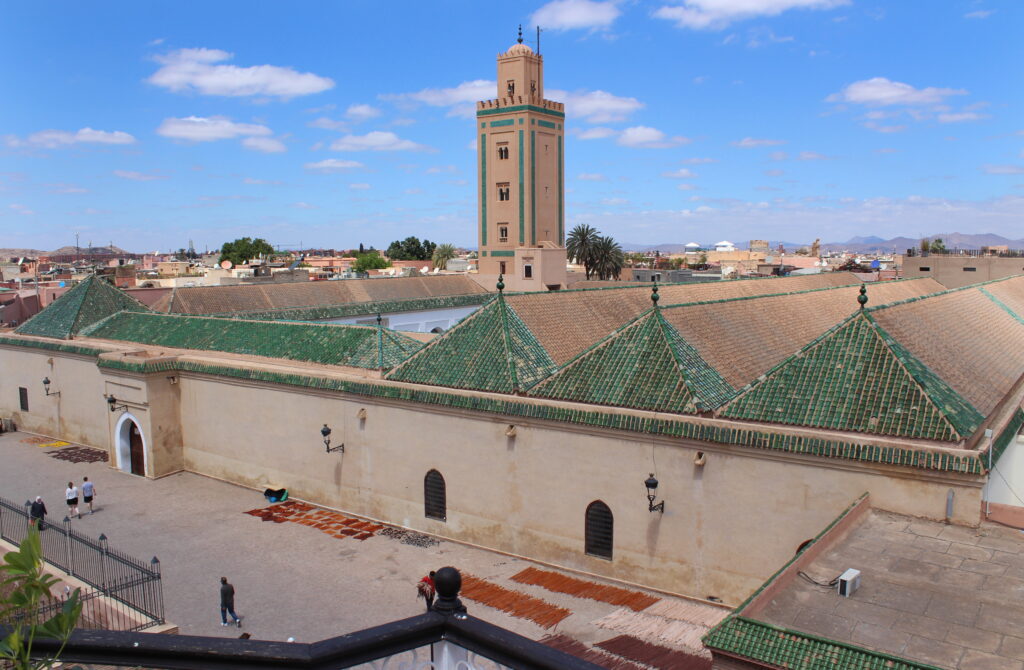
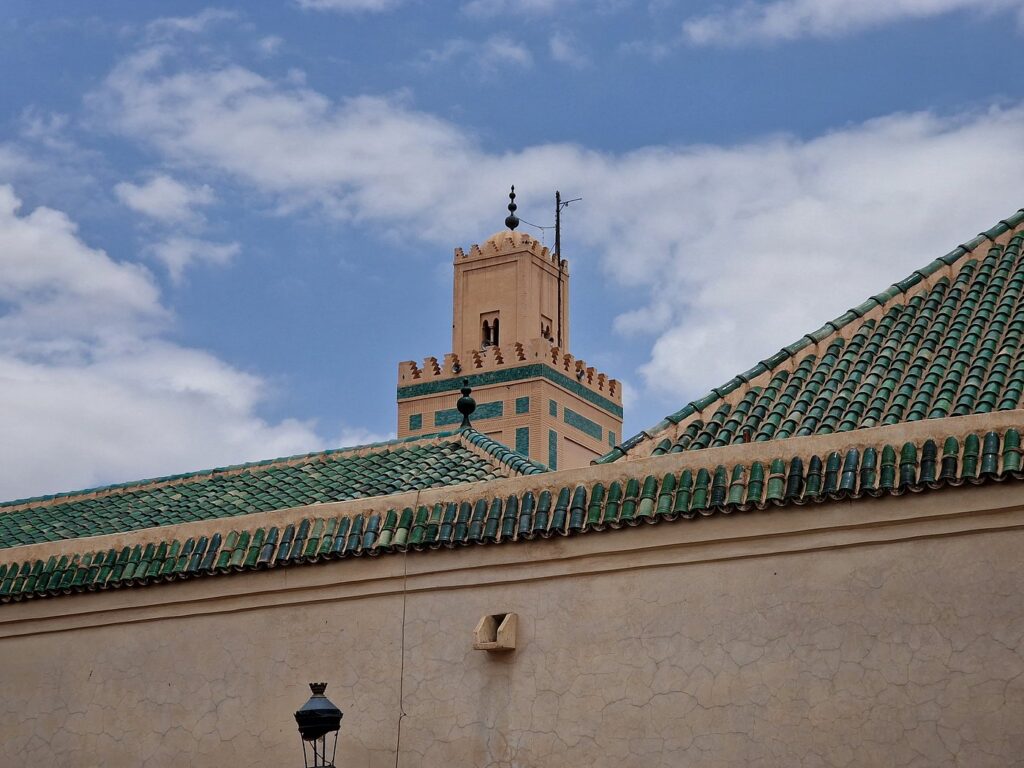
The Ben Youssef Mosque holds a unique place in Marrakech’s religious and intellectual history, closely tied to the nearby Medersa Ben Youssef. Many travelers visit the medersa and assume the mosque is simply an extension of it, but the mosque actually came first, serving as the spiritual anchor around which centuries of learning grew.
Founded in the 12th century and rebuilt several times over the centuries, Ben Youssef Mosque was once one of the city’s most important religious institutions. It anchored a network of study that drew students from across North Africa and beyond, making this part of Marrakech a hub of intellectual and spiritual activity.
What many visitors don’t realize is how deeply intertwined education and religion were here. The medersa was far more than a decorative monument.. it was a working school where students studied, debated, and memorized religious texts. The mosque’s daily prayers set the rhythm of academic life, and together, mosque and medersa embodied a holistic vision: spiritual devotion and scholarly pursuit were inseparable.
Architecture and Atmosphere
Although non-Muslims cannot enter, the mosque’s understated exterior hints at its historical importance. Its simple yet elegant courtyards, arches, and minaret reflect traditional Moroccan-Islamic design, emphasizing function and spiritual focus over ornamental excess. Today, the streets around the mosque remain lively, blending the quiet dignity of the mosque with the everyday rhythm of Marrakech. Families stroll nearby, students pass through, and local life continues against the backdrop of centuries of learning.
Historical and Cultural Legacy
This area was historically one of the intellectual hearts of Marrakech, not merely a religious quarter. The mosque’s enduring presence reminds visitors that the medina was as much a city of knowledge as it was a city of faith, where community, devotion, and scholarship converged in daily life.
Kasbah Mosque (Moulay el Yazid Mosque): A Timeless Jewel of Almohad Architecture
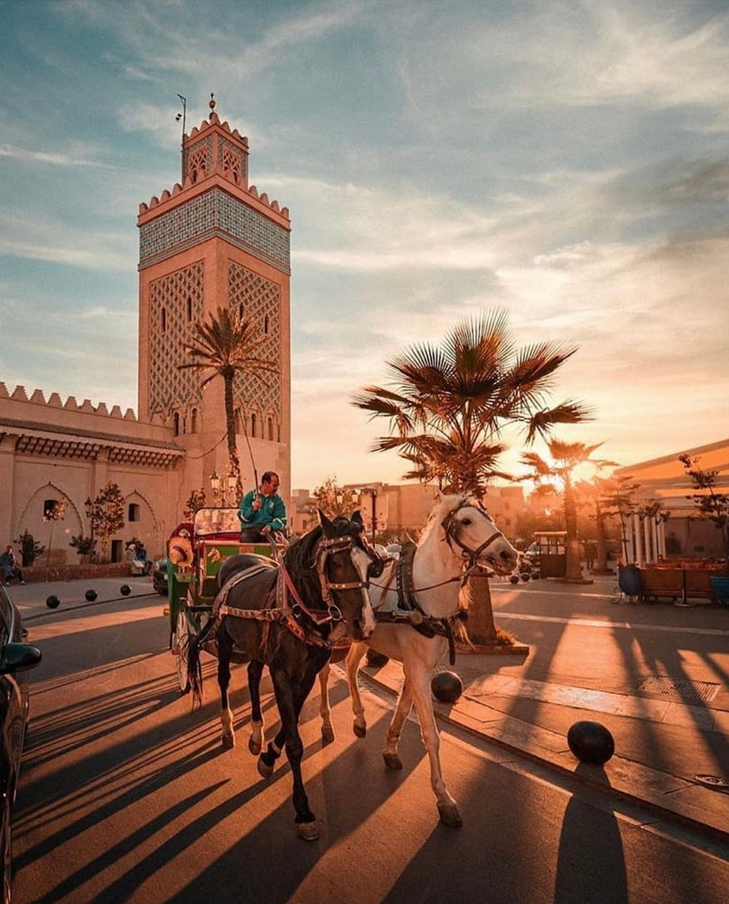
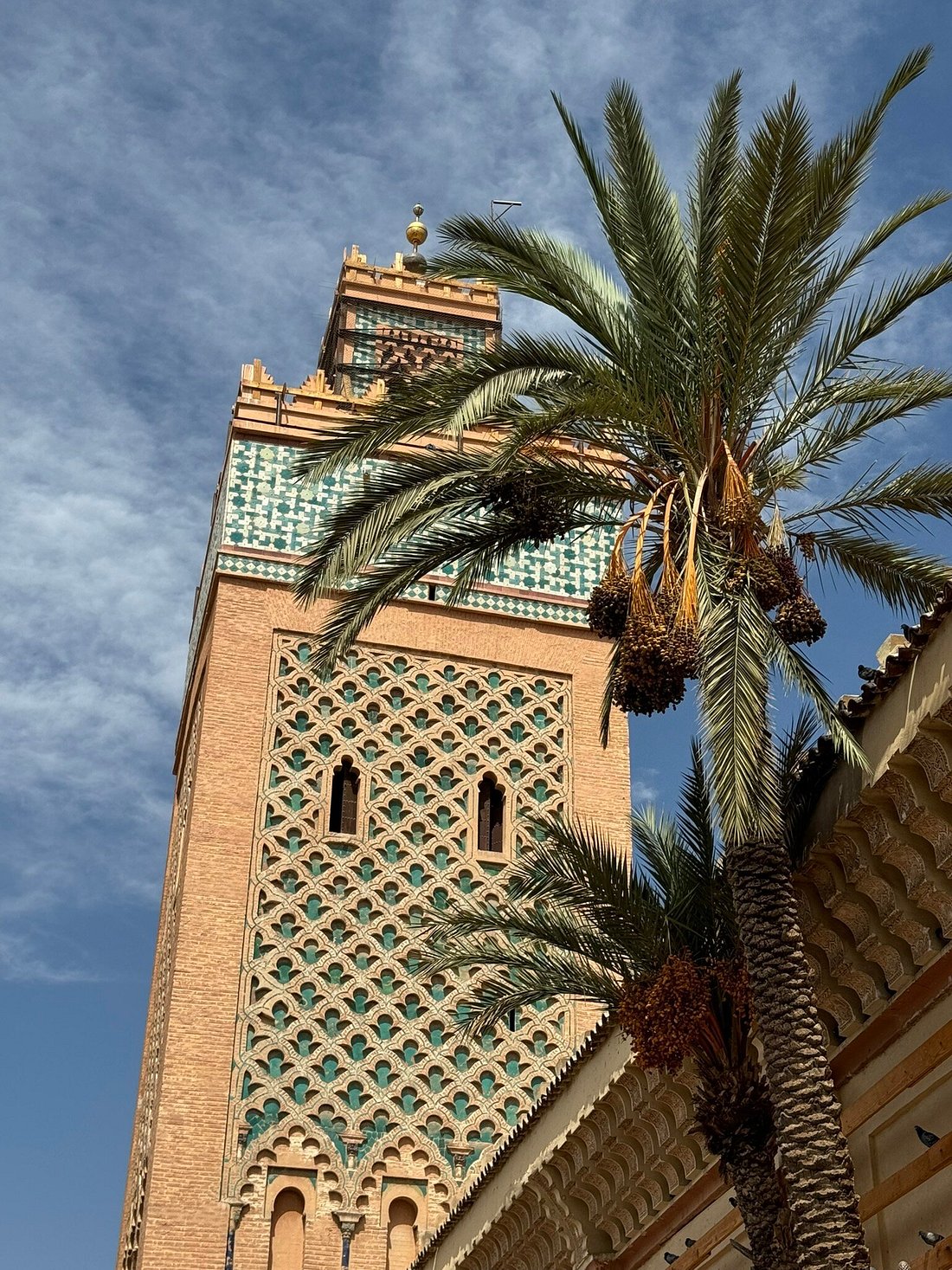
The Kasbah Mosque, also known as Moulay el Yazid Mosque, stands as one of Marrakech’s most historically and architecturally significant religious sites. Located in the southern Kasbah district, it was commissioned by the Almohad caliph Yaqub al-Mansur between 1185 and 1190 CE (581–586 AH). When the mosque was completed around 1197 CE (594 AH), it exemplified the Almohads’ dedication to both spiritual devotion and architectural excellence, showcasing some of the finest craftsmanship of the period.
Historical sources describe the mosque’s construction as remarkable. According to Ibn Abi Zar, Yaqub al-Mansur financed the mosque using one-fifth of the spoils from his campaigns in Rome. Later chroniclers, such as Al-Hasan al-Wazzan (Leo Africanus), marveled at its majesty: “A mosque of extraordinary beauty and grandeur, crowned with a strikingly elegant minaret. At its top rests a column of iron supporting three golden apples, the largest at the bottom, the smallest at the top.” Many rulers wished to melt these golden apples for coin in times of financial need, but strange occurrences always prevented them—so far that they thought they would be cursed if they did, leaving the apples untouched.
Architectural Features
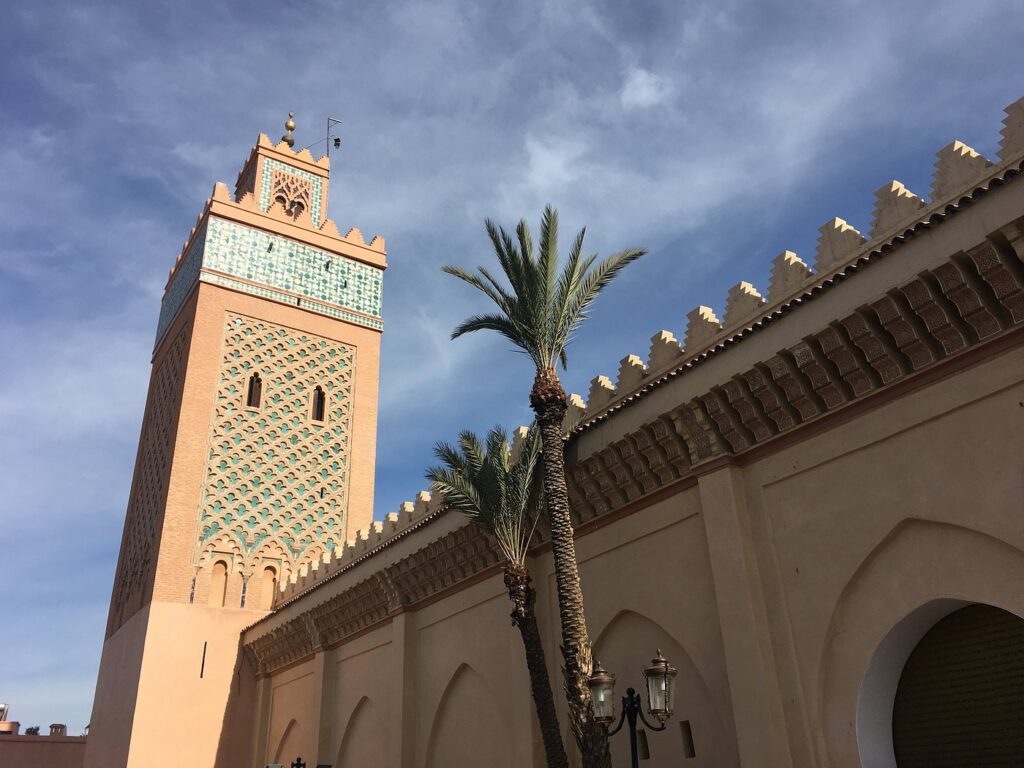
The mosque is a masterpiece of Almohad architecture, reflecting the dynasty’s preference for imposing proportions, geometric harmony, and understated ornamentation. Its minaret, while slightly more restrained than the Koutoubia, commands the Kasbah skyline and served both as a visual guide and a symbol of power. The mosque’s spacious prayer hall and serene courtyard embody the Almohad ideal of functional yet majestic religious spaces.
Though non-Muslims cannot enter, the mosque’s exterior provides insight into its historical importance. Its towering minaret and austere, harmonious walls offer a sense of the mosque’s former glory. Situated in the heart of the Kasbah, the mosque also anchors the district’s historic and political significance, as this area was once the seat of royal authority in Marrakech.
Cultural and Historical Legacy
The Kasbah Mosque is not only a religious monument but also a symbol of Almohad power and architectural innovation. Its presence reinforced the Kasbah as the political and spiritual center of the city, linking worship, governance, and the memory of conquest in a single, enduring structure. Today, the mosque stands as a reminder of Marrakech’s rich medieval history and the Almohads’ lasting influence on Moroccan architecture.
Its striking minaret and historic walls have also become part of modern culture, appearing in films and international ad campaigns. Notably, Pepsi filmed a commercial featuring Lionel Messi and other football stars in the area, using the mosque’s dramatic backdrop to showcase Marrakech’s timeless Moroccan charm to a global audience. These appearances show that even today, the Kasbah Mosque continues to inspire… not just worshippers and historians, but artists, filmmakers, and creators alike.


Ben Salah Mosque: Marrakech’s Marinid Architectural Gem
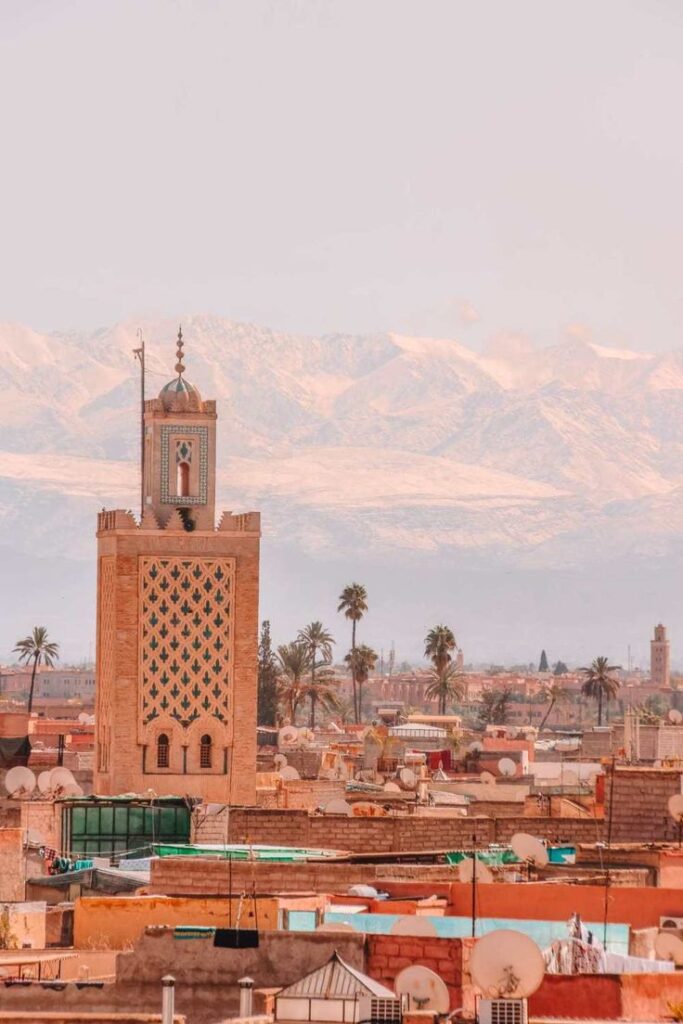
The Ben Salah Mosque (also spelled Ben Saleh Mosque) is one of Marrakech’s most significant surviving medieval mosques, known especially for its elegant minaret and its rare status as the only major Marinid‑era monument in the city’s historic medina. Built in the early 14th century (around 1318–1321 CE) during the reign of the Marinid sultan Abu Sa’id Uthman II, it represents a distinct chapter in Moroccan Islamic architecture that followed the Almohad period.
Historical Significance
Unlike some other major sites in Marrakech, the exact patron of the mosque isn’t clearly recorded in contemporary inscriptions. Historical writing suggests its construction was likely commissioned during the Marinid dynasty and may have involved a private benefactor, but the mosque has endured as a testament to the era’s artistic and religious life. It was named after Muhammad ben Salah (Ibn Salih), a local saint whose tomb is contained within the mosque complex, reflecting how spiritual devotion and communal remembrance were often intertwined in the city’s religious buildings.
Architecture and Layout
The mosque’s architecture follows the classic Moroccan mosque plan of the period, centered around a rectangular courtyard (sahn) and a hypostyle prayer hall. Inside, two rows of arches create nine aisles, with the central aisle leading toward the richly decorated mihrab indicating the direction of prayer. A distinctive feature of this mosque is the way some side aisles are truncated; a design choice that is relatively uncommon in similar mosques of the era.
But the element that most sets Ben Salah apart is, again, its minaret. Though modest in height compared to later Moroccan towers, it is richly adorned with geometric motifs and decorative brickwork that reflect the transition from Almohad forms to the fully developed Marinid style. Patterns such as darj‑wa‑ktaf (also called sebka) and polylobed arches give its facades rhythmic visual appeal, and the turquoise‑green faience tiles stand out against Marrakech’s signature red sandstone.
Why It Matters
As the only major Marinid mosque surviving in Marrakech, Ben Salah Mosque offers visitors a rare glimpse into a transitional period of Moroccan Islamic architecture, bridging the robust forms of the Almohads with the refined ornamental vocabulary that later became characteristic of Moroccan mosques.
Visiting Today
While the interior remains reserved for worshippers, the exterior of Ben Salah Mosque is a treat for visitors. The intricately patterned minaret, colorful tile accents, and the subtle play of light across its arches make for excellent photo opportunities, especially in the soft morning or late-afternoon light. Walking the nearby streets, visitors can soak in the authentic medina atmosphere: children play near the mosque walls, locals shop in small markets, and the scent of spices and fresh bread fills the air. For those exploring Marrakech, Ben Salah Mosque is a quieter, off-the-beaten-path counterpart to the city’s more famous landmarks, offering both historical depth and a living slice of daily Moroccan life.
Mosquée Aïcha
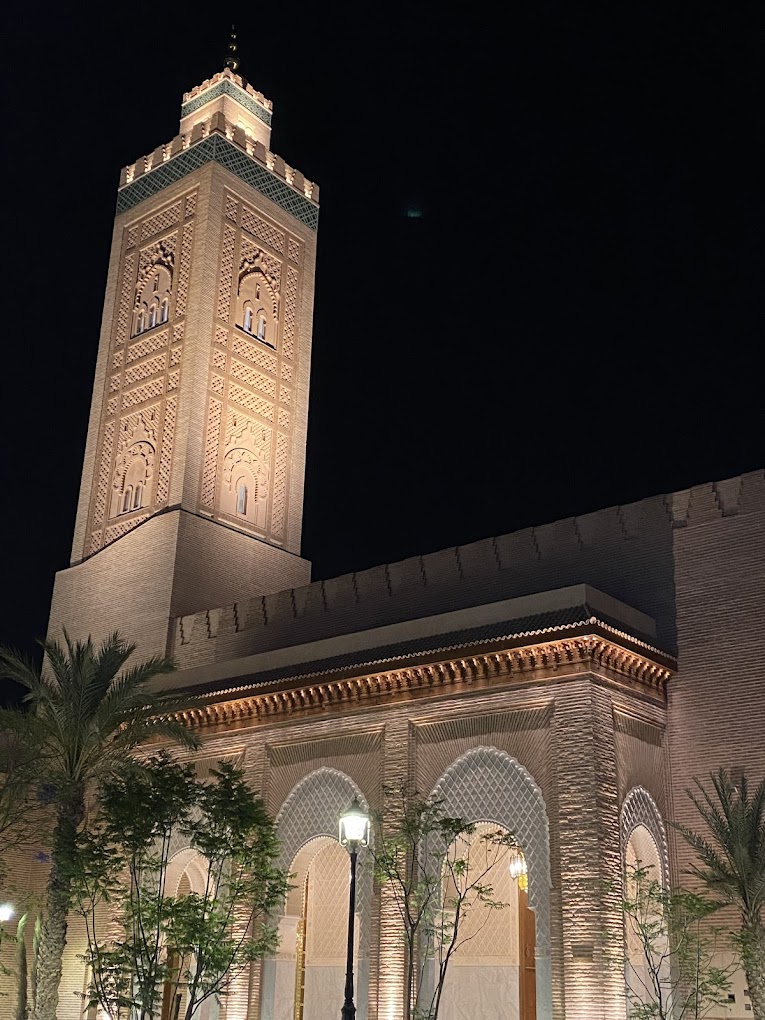
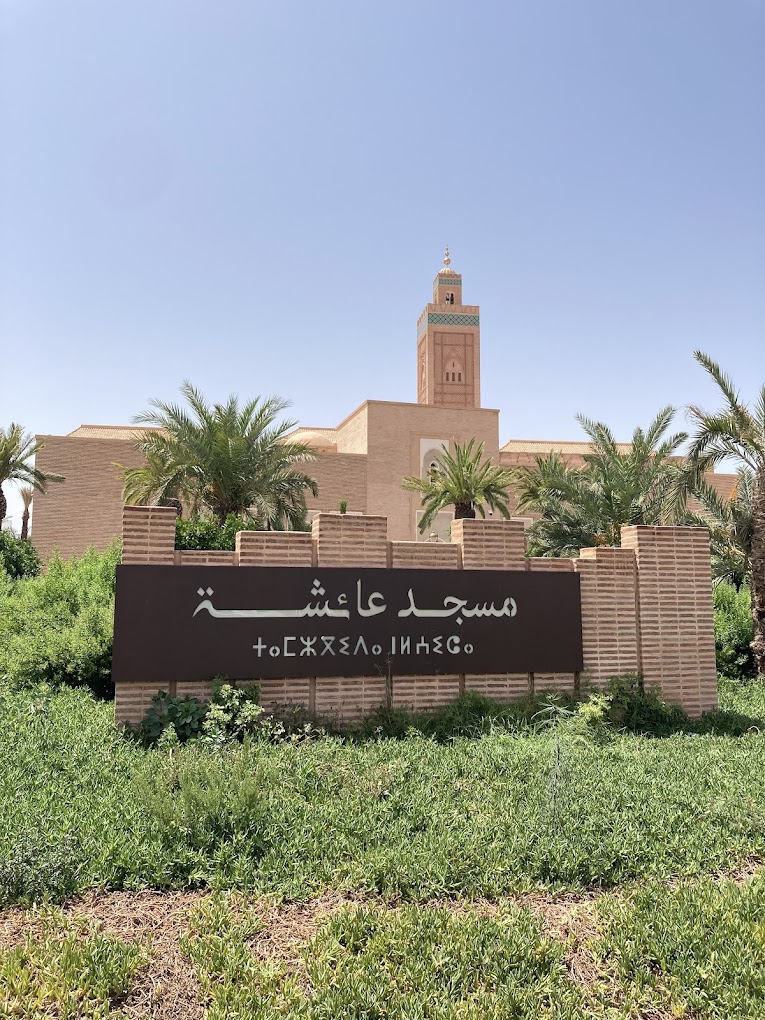
The Mosquée Aïcha is one of Marrakech’s newest and most striking mosques, officially inaugurated on January 5, 2024. It is named after Aïcha bint Abi Bakr, the Prophet Muhammad’s wife and Umm al-Mu’minin (“Mother of the Believers”), who was beloved for her knowledge, piety, and devotion. Renowned for her expertise in fiqh (Islamic jurisprudence), hadith, Quranic interpretation, medicine, and poetry, she served as a key reference for the Companions of the Prophet. By naming the mosque after her, the project honors her legacy as a symbol of learning, faith, and spiritual guidance.
The mosque was a generous gift from Hamad bin Khalifa Al Thani, the former Emir of Qatar (1995–2013), reflecting a commitment to fostering spiritual and cultural ties between Morocco and Qatar.
Design and Architecture
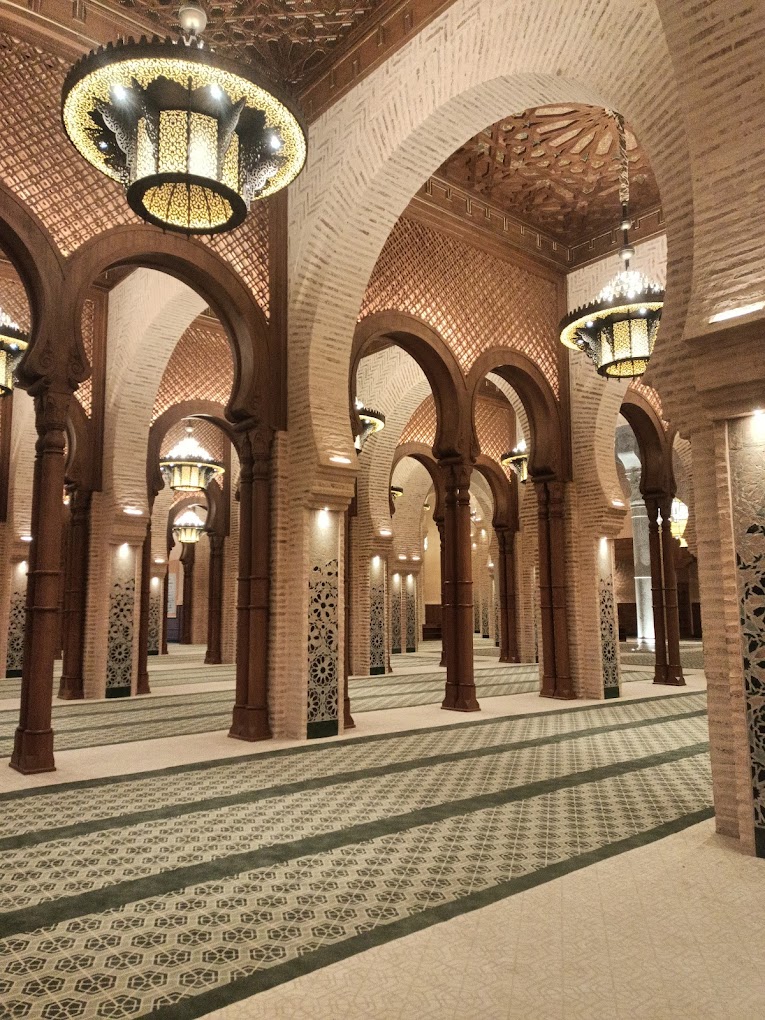
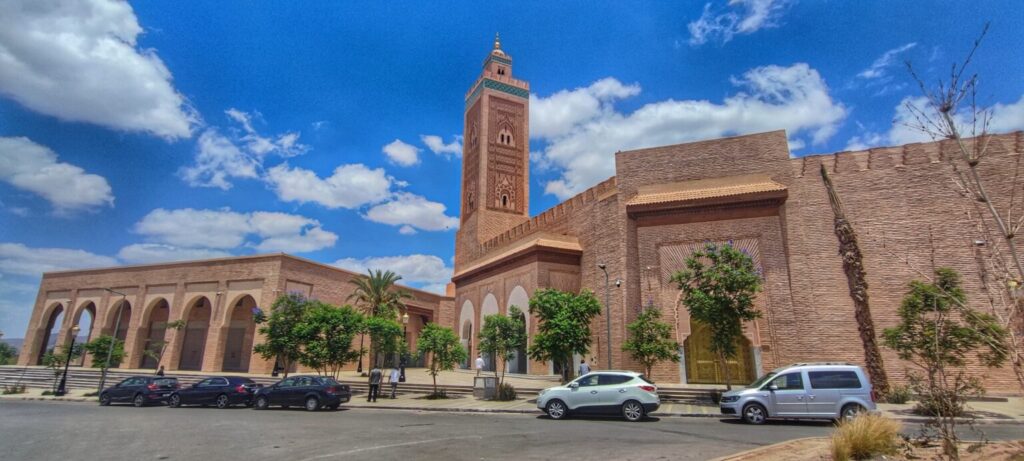
Mosquée Aïcha is a true masterpiece of modern Moroccan religious architecture. Its exterior, with a minaret reminiscent of the iconic silhouette of the Koutoubia, reflects traditional Moroccan forms, while the interior combines Middle Eastern-inspired design elements with modern functionality. The mosque’s large prayer halls, elegant arches, airy courtyards, and carefully arranged decorative details create a space that is both spiritually uplifting and visually stunning.
Visitors and worshippers praise its cleanliness, serenity, and inspiring atmosphere, making the mosque both a place of worship and a sanctuary for reflection and meditation. Every detail, from the geometric motifs to the layout of the prayer areas, was designed to enhance the spiritual experience.
Community Role
Beyond its architectural beauty, Mosquée Aïcha plays a vital role in the spiritual and social life of Marrakech’s northern districts. Situated north of Daoudiate, near the Palmeraie, and easily accessible from Boulevard Oued Issil, the mosque serves as a central gathering place for daily prayers, Friday congregations, and religious festivals. During Ramadan, it becomes especially lively for Taraweeh prayers, when worshippers come together nightly for longer communal prayers.
The mosque also strengthens community bonds, offering a welcoming space where residents connect, reflect, and participate in educational and religious activities. By blending traditional Moroccan architectural forms with modern design and functionality, Mosquée Aïcha ensures that worshippers of all ages can experience spiritual devotion in a comfortable and inspiring environment.
Why It Matters
As one of the most visually striking and modern mosques in Marrakech, Mosquée Aïcha demonstrates how Moroccan mosque architecture can evolve while maintaining deep ties to tradition. Its design reflects both a reverence for historical forms and a commitment to serving a modern, vibrant community, making it a unique addition to the city’s spiritual and cultural landscape.
Practical Tips for Visiting and Photographing Marrakech’s Mosques
Even if you cannot enter mosque interiors, there are plenty of ways to engage meaningfully and capture their beauty. Here are some practical tips:
Best Angles and Views
- Koutoubia Mosque: Try photographing from the nearby gardens or from streets in the medina for a sense of scale. Sunset casts a warm glow on the minaret, highlighting its textures.
- Ben Salah and Kasbah Mosques: Early morning or late afternoon provides soft light on the minarets and façades. Walking the surrounding streets helps capture the mosque in context with daily life.
- Mosquée Aïcha: Its modern architecture and reflective surfaces work well under clear skies. Wide-angle lenses capture the scale of the prayer halls and courtyards from outside.
Timing Matters
- Avoid peak prayer times if you prefer quieter streets for photography
- Evenings often bring a softer, livelier atmosphere as neighborhoods gather outside mosques.
Respectful Observation
- Always keep a respectful distance from worshippers, and avoid pointing your camera directly at people without permission.
- Quietly observing the flow of life around a mosque — vendors, schoolchildren, families — can be as rewarding as any interior view.
Final Thoughts
Marrakech’s mosques are more than architectural landmarks; they are living centers of the city’s spiritual, social, and cultural life. Whether centuries old like Koutoubia and Kasbah, or modern and inspiring like Mosquée Aïcha, each mosque tells a story about the city’s past, present, and enduring traditions.
Even without entering, taking the time to notice their details, watch the rhythms of daily life around them, and explore different perspectives will give you a deeper understanding of Marrakech. The mosques anchor neighborhoods, mark the city skyline, and offer countless quiet moments to reflect, photograph, or simply pause.
In Marrakech, mosques are less about sightseeing and more about seeing the city itself. Approaching them with curiosity, patience, and respect transforms a casual visit into a meaningful encounter with the heartbeat of the city.
For those eager to explore more, our Highlights of Marrakech: Private Half-Day City Tour offers a curated route through the city’s most iconic landmarks, including Koutoubia Mosque, providing historical insight and insider stories along the way.