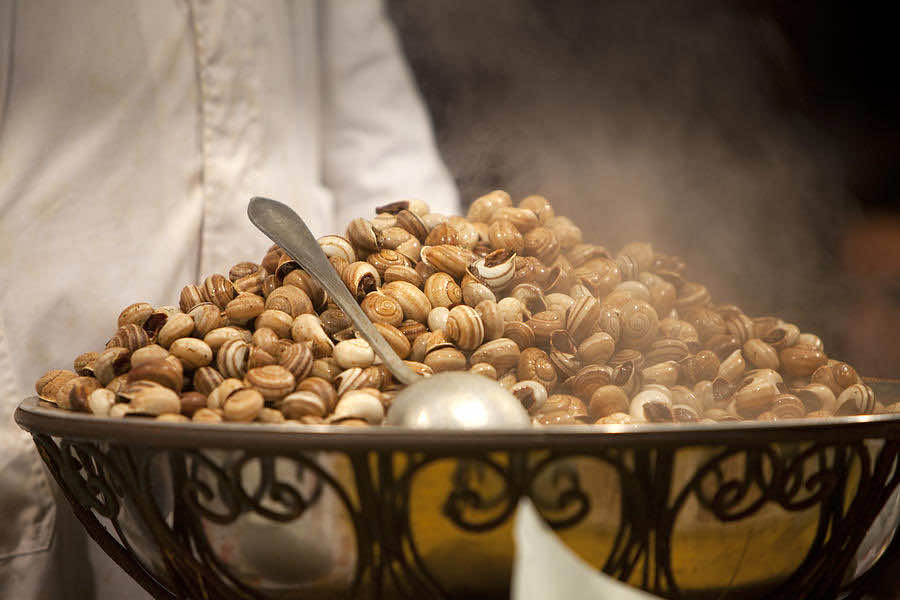
Marrakech has a way of keeping your senses on full alert. Between wandering through the medina, browsing colorful souks, and soaking up that bright North African sun, you’ll find yourself craving something cool and refreshing more often than not. Luckily, Morocco has a whole menu of drinks that go beyond your standard bottled water.
From sweet teas to creamy blends, sipping your way through the city is an experience in itself. Here are five drinks you definitely need to try while you’re here.
1. Mint Tea (Atay b’naana)
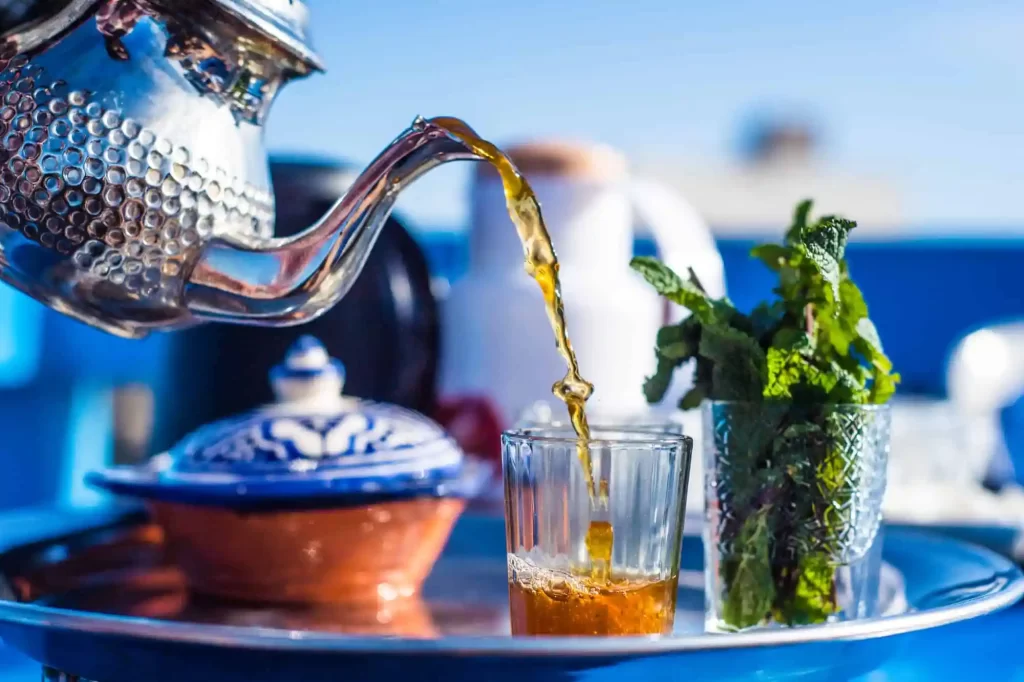
Yes, it’s hot, but it’s also the drink you’ll be offered everywhere you go — and trust us, it works its magic in any weather. It may seem counterintuitive, but Moroccan mint tea is just as popular in summer as it is year-round.
Mint tea isn’t only about quenching thirst. It’s a ritual, a symbol of hospitality, and perhaps the most iconic taste of Morocco.
The tea itself is a strong green tea infused with generous handfuls of fresh mint and usually plenty of sugar. Many travelers are surprised by how sweet it is, but that sweetness is part of what makes it so refreshing and energizing, especially after long walks under the sun. What also makes Moroccan mint tea special is the way it’s poured: from high above the glass, creating a delicate foam on top. It’s as much a performance as it is a drink — and after some time here, you might even learn to pour it that way yourself.
Accept it whenever it’s offered. Even if you only take a sip, you’re sharing a moment. And after a long walk through the souks, there’s nothing more soothing than sitting down with a glass of this fragrant, gently sweet pick-me-up.
Practical tip: If you prefer it less sweet, don’t hesitate to ask, whether at a café or in a private home or small shop. Most people are happy to adjust it to your taste. In fact, the less-sweet version is often favored by older locals or anyone watching their sugar intake.
2. Fresh Orange Juice
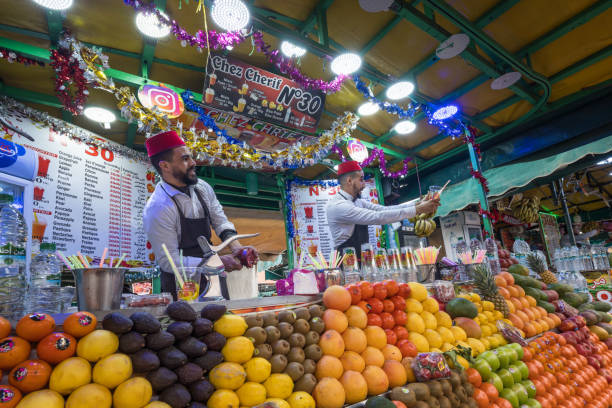
If there’s one thing Marrakech does better than almost anywhere else, it’s fresh orange juice. Juice stalls line the streets around Jemaa el-Fna, where vendors proudly squeeze oranges right in front of you. You’ll also find fresh juice throughout the city, especially in small mahlabas — popular, budget-friendly local eateries that serve quick meals, sandwiches, and healthy drinks like fresh juices and smoothies. For just a few dirhams, you’ll get a glass of pure sunshine: sweet, tangy, and incredibly refreshing.
Moroccan oranges are naturally rich and full of flavor, and they’re only picked when fully ripe, so there’s no need for added sugar. The taste is pure, bright, and perfectly revitalizing, the perfect antidote to the city heat, and an ideal pick-me-up any time of day. You might even find yourself coming back for a second (or third) glass.
When ordering in Jemaa el-Fna, look for stands where the oranges are squeezed on the spot and served chilled. That’s the real deal, and it’s hard to beat.
3. Avocado Smoothie
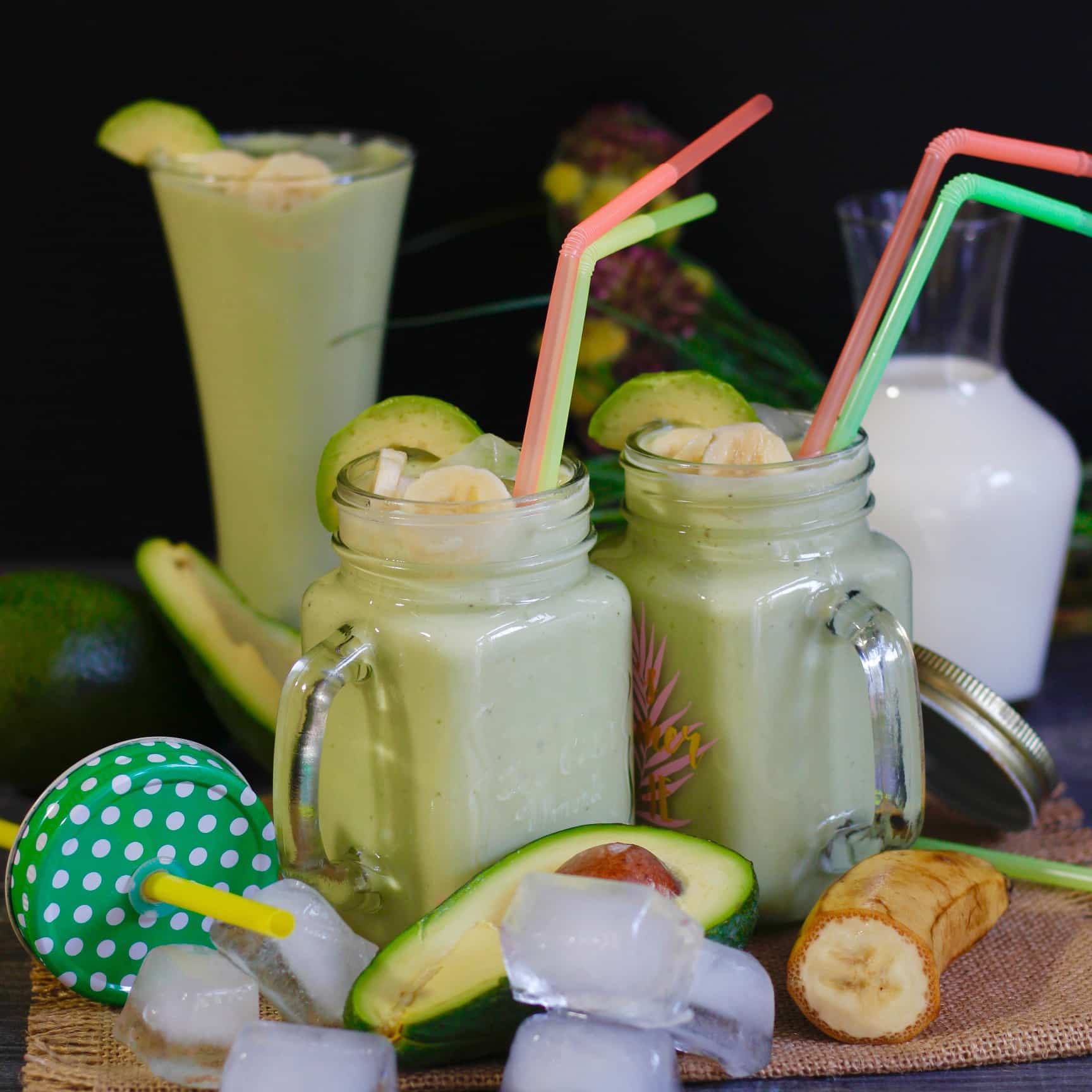
This one might surprise you, but avocado juice is a local favorite — and nothing like the smoothies you might know back home. In Marrakech, ripe avocados are blended until creamy, usually mixed with milk and just enough sugar to give it a subtly sweet, almost dessert‑like taste.
Some cafés take it up a notch by adding nuts, dates, or even a drizzle of honey on top. The result is thick, filling, and surprisingly refreshing for such a rich drink. It’s the kind of thing you’ll order once out of curiosity, and then find yourself craving again before you leave.
Some cafés and mahlabas take it a step further by adding nuts, dates, or even a drizzle of honey on top. The result is thick, filling, and surprisingly refreshing for such a rich drink. It’s the kind of treat you’ll order once out of curiosity and then find yourself craving again before you leave.
Avocado smoothies are especially popular during the month of Ramadan, both as a nourishing option to break the fast (ftour/iftar) and as a hearty drink to enjoy before the fasting day begins (suhoor).
Interestingly, Morocco now grows avocados too, with thriving orchards in regions like Gharb and Loukkos along the Atlantic coast, where soil and climate are ideal for the fruit. Production now slightly exceeds that of the state of California (USA).
Tip: For a lighter version, ask for less sugar. Most cafés are happy to adjust it to your taste.
4. Panaché
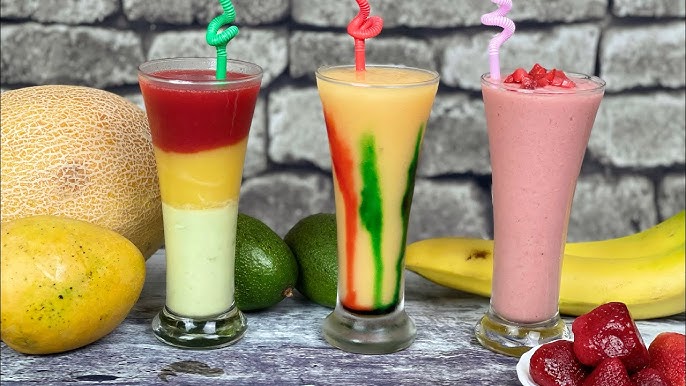
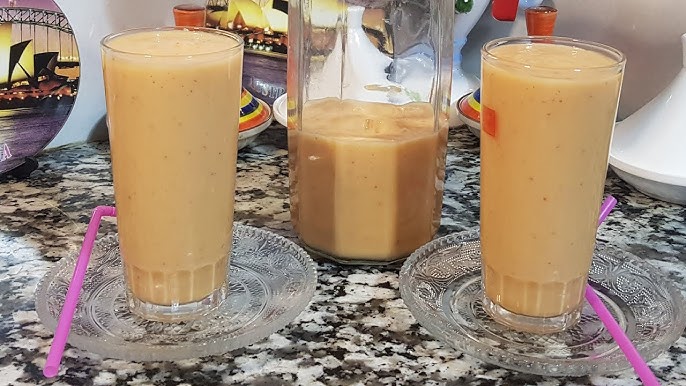
Panaché is what happens when we Moroccans decide to throw half the fruit basket into a blender. The base is usually either fresh orange juice or milk, mixed with avocado, bananas, apples, mangoes, or whatever fruit is freshest that day. Most of the time it’s fully blended, resulting in a vibrant orange-red color (with orange juice) or a soft rosy hue (with milk). Some mahlabas and pastry shops get more creative, serving it layered, with colorful stripes stacked beautifully across the glass.
Moroccan panaché is sweet, colorful, cheerful, and feels more like a treat than just a drink. It’s perfect if you can’t decide on just one flavor — or if you want something playful to sip while people-watching from a café terrace.
It’s also a true vitamin cocktail, naturally rich in vitamins A, C, E, potassium, and fiber, thanks to the variety of fresh fruits used. In many places, it’s made with no added sugar at all, relying entirely on the fruit’s natural sweetness.
No two places make panaché exactly the same. Ask the waiter what’s in their version that day, as discovering a new combination is part of the fun. In northern Morocco, you may also find a version made with dragon fruit, which gives the drink a very unique color and a subtly exotic flavor.
5. Khoudenjal (Spiced Herbal Tea)
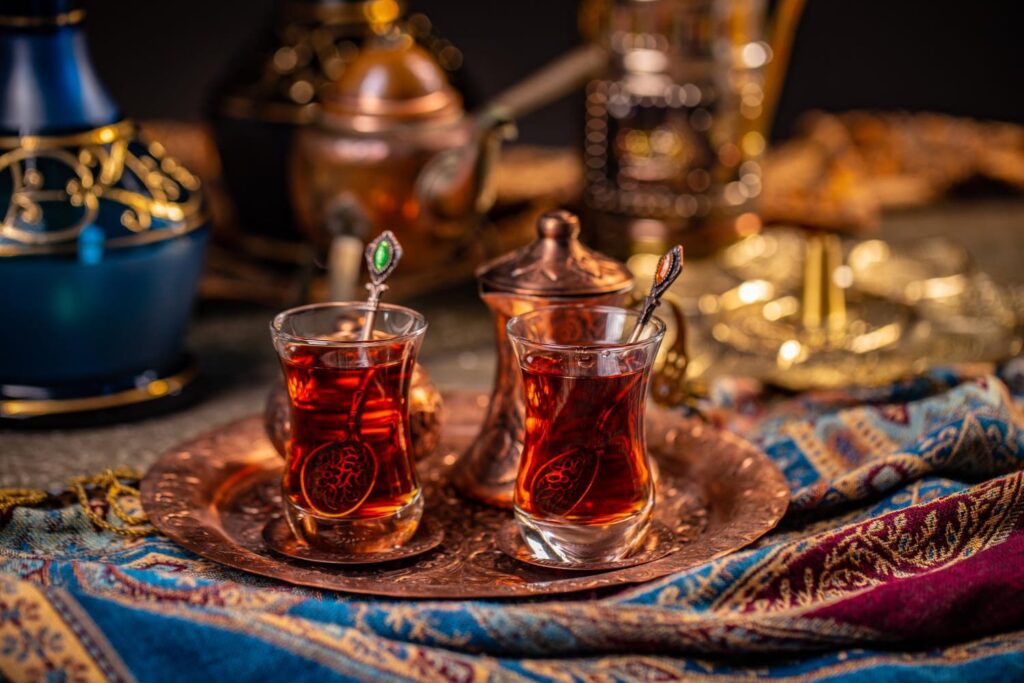
Not all Moroccan drinks are about fruit or sweetness. Some are about warmth, spice, and balance. Khoudenjal is a traditional herbal tea made with a blend of cinnamon, ginger, cloves, cardamom, and other aromatic spices, often simmered slowly to let the flavors fully develop.
It’s always served hot, and while that might seem surprising in the Marrakech heat, many locals swear by it. Rather than cooling you down, khoudenjal revitalizes in a different way. It gently stimulates the body, clears the senses, and leaves you feeling grounded and refreshed from the inside out.
Khoudenjal is especially popular in winter and during cooler evenings, when it’s appreciated for its comforting and warming qualities. That said, you’ll still find it year-round in traditional cafés, or herbal stores, where it’s often enjoyed slowly, sipped rather than rushed.
It’s also affectionately known as “la boisson des amoureux”, or the lovers’ drink. Traditionally, khoudenjal is believed to have aphrodisiac properties, thanks to its warming spices and stimulating ingredients, and it’s often associated with romance, vitality, and energy.
If you enjoy chai, you’ll probably love khoudenjal. Think of it as Morocco’s answer to spiced tea, familiar yet distinct, with its own deeply aromatic twist.
Parting Note
Exploring Marrakech isn’t just about what you see, it’s also about what you taste. These five drinks are more than simple thirst-quenchers; they’re small windows into everyday life. From sharing mint tea as a gesture of welcome to sipping fresh orange juice in Jemaa el-Fna or indulging in a colorful panaché, each glass tells its own story.
So when you’re here, don’t just grab a bottle of water and move on. Take a moment. Sit down, sip slowly, and let these flavors become part of your memory of the city. Often, it’s the simplest experiences — a shared tea, a freshly squeezed juice, a cool drink on a hot day — that stay with you long after the trip is over.
And if you’d like to taste some of these drinks the way locals do, you're more than welcome to join us on our Best-Selling Authentic Marrakech Food Tour. It’s a delicious way to sip, snack, and discover the city all at once.